

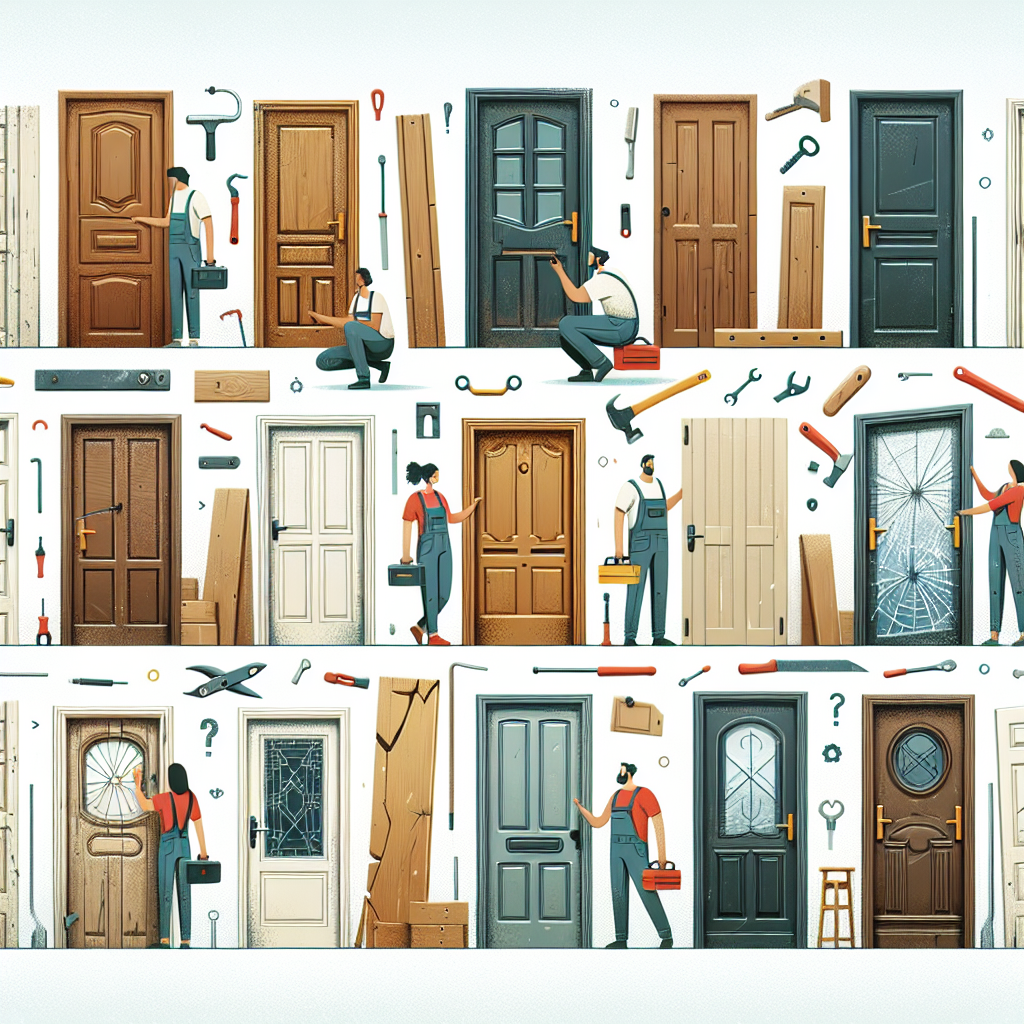
When a sticking entry, loose hinge, fogged glass, or a jammed sliding door disrupts your home or business, you need dependable door repair services that diagnose the real cause and fix it for the long run. This article walks Ocala homeowners and property managers through common symptoms, quick on-site checks, practical repair versus replacement decisions, and what to expect from R C Windows & Doors during an inspection and estimate.
Common Door Symptoms and How to Diagnose Them
Start with the symptom, not the fix. A door that sticks, rattles, or refuses to lock is a symptom — the repair is determined by the root cause you diagnose on site.
Symptoms and quick, safe checks you can do now
- Sticking or binding: Open and close the door slowly, watching reveal gaps top, middle, bottom. If gaps change as the door moves, the problem is alignment or hinge sag — not the lock.
- Sagging or uneven gap: Press the top of the door while someone operates it. If the latch misaligns, try tightening hinge screws; if the jamb moves, frame shimming or reinforcement is needed.
- Drafts at threshold or edges: Hold a thin strip of paper along the threshold and around weatherstripping. If paper slips through, replace weatherstrip or adjust the threshold.
- Hard to turn lock or key: Test the cylinder with the door open and closed. Smooth operation when open but not when closed points to latch strike misalignment — not necessarily a bad cylinder.
- Fogged or cracked insulated glass: Look for condensation between panes or a hairline crack. Condensation between panes means the sealed unit has failed and typically requires IGU replacement; do not attempt to remove glazed units yourself.
- Sliding door that grinds or jumps track: Lift the sash slightly; if it comes out of the track with effort, rollers are worn. If the sash will not lift or the frame is bent, expect heavier work or replacement.
Practical trade-off: Quick hardware fixes are cheap and fast, but they can be temporary. For example, tightening hinges and adding longer screws often corrects a sagging front door for a few years — until underlying jamb rot or repeated settlement returns. Investing a little more in frame reinforcement up front avoids repeated service calls.
Ocala-specific note: High humidity and sun accelerate swelling, paint failure, and seal breakdown. That means doors may stick seasonally and IGU seals fail sooner than in cooler climates. When you call door repair services or search for door repair near me, mention climate exposure so technicians bring appropriate sealants, stainless fasteners, and replacement parts.
What to photograph and record before the service call
- Four-angle shots: full door from outside and inside, close-ups of the latch area, hinges, threshold, and any damaged glass.
- Short video: open/close cycle showing noise, binding, or misalignment (helps diagnose rollers or hinge sag).
- Measurements: width of visible gap(s) in inches and thickness of weatherstrip if possible.
- History note: any previous repairs, hurricane damage, or water intrusion in the area.
Concrete example: A tenant reported a sliding patio door that scraped and would not lock. Photo and a 15-second video showed the door tracking low on one side; on arrival the technician lifted the sash and confirmed worn rollers. Replacing Johnson Hardware rollers and realigning the track restored smooth operation and secure locking in under three hours.
Key takeaway: Diagnose by observing movement and gaps, not by guessing hardware. For safety-critical issues — broken glass, failed locks, structural rot, or storm-damaged frames — stop DIY and call a pro.
Repair Solutions by Problem Type
Straight to the point: most door failures respond to a narrow set of repairs — but the right fix depends on the failure mode and underlying cause. Replacing visible parts without addressing what caused them to fail is the common reason repairs come back.
Hinges, frames, and alignment
Fix: reinforce with longer stainless screws into framing, replace worn hinge leaves or pins, add shims behind the jamb, or install a hinge repair plate for repeated sagging. Trade-off: short-term screw fixes are cheap and fast; frame reinforcement or jamb replacement costs more but prevents repeated callbacks when rot or settlement is present.
Locks and hardware
Fix: realign strike plates, rekey or replace cylinders with Schlage or Kwikset Grade 1 hardware, and upgrade strike reinforcement. Consideration: a stiff lock can be a symptom of misalignment — replacing the cylinder alone wastes money if the latch still rubs the jamb.
Weatherstripping, thresholds, and energy leaks
Fix: swap in compression or V-strip weatherstripping (Pemko, Frost King), install adjustable thresholds, or add a sill pan to improve drainage. Limitation: weatherstrip fixes help comfort and bills but do not solve structural rot or a warped frame — those require more invasive work.
Glass, glazing, and insulated units
Fix: replace glazing beads, reglaze if the door skin and core are sound, or replace the insulated glass unit (IGU) when seals fail. Follow National Glass Association guidance for IGU work. Judgment: fogged IGUs are replaceable, but if the door core is delaminated or the frame is rotten, replacing the whole door is the sensible long-term option.
Sliding doors and tracks
Fix: replace rollers (Johnson Hardware, Prime-Line), true bent tracks, or service locks and keepers. Practical note: rollers alone fix most sluggish sashes — but if the sill is water‑damaged or the frame twisted, repairing individual parts only delays a full replacement.
Garage doors: spring, cable, and opener problems are dangerous. Call specialists for spring replacement and balance tests; this is not a homeowner repair. Garage door repairs often require heavier equipment and safety training.
- Common parts techs bring: long stainless screws, reinforced strike plates, Pemko weatherstrip, Johnson Hardware rollers.
- When we recommend replacement: widespread rot, multi-component failures, or when upgrading to low-E glass and multi-point locks is the goal.
- Quick wins to ask for: hinge bushing replacement for heavy doors, hardened strike plates, adjustable thresholds.
Concrete example: A wood front door that stuck every summer had deterioration at the bottom from splashback. The technician replaced the bottom rail, installed a ventilated threshold and Pemko sweep, and fitted stainless hinge screws into studs — the door now stays aligned year-round and the new threshold prevents the same rot from recurring.
Key takeaway: Match the repair to the root cause. Small hardware fixes are cost-effective when the frame and door core are sound; when moisture, rot, or multiple failing systems are present, replacement is usually the better investment. For local service and a practical estimate.
When to Repair Versus When to Replace
Straight answer: choose repair when the failure is isolated and the door core and frame are sound; choose replacement when structural integrity, long term performance, or safety is compromised. This is a judgement call that balances immediate cost, future service calls, and the value of upgraded features like low E glass or multi point locking.
What actually matters in the decision: look at four things — the scope of damage, the expected remaining service life, energy or security targets, and the repair cost as a share of replacement. If two or more of these point toward replacement, it usually pays to replace rather than patch.
A practical scoring approach
Score the job quickly on site: 1 point for isolated hardware failure, 2 points for localized rot or a single failed IGU, 3 points for multiple failing systems or compromised frame, and 4 points for major structural damage or code/security failure. At 1 to 2 points favor repair; 3 is a judgement call depending on cost and expected life; 4 favors replacement.
- Step 1: Confirm whether the door skin, frame, and threshold are intact or showing rot, delamination, or warping.
- Step 2: Get a written repair estimate that lists parts, labor, and warranty terms.
- Step 3: Obtain a replacement estimate for a comparable door with performance upgrades you might want (low E glass, better hardware, Florida code options).
- Step 4: Compare lifecycle cost: if the repair exceeds about 50 to 60 percent of replacement or the remaining life after repair is short, choose replacement.
Trade-off to understand: a cheap quick fix can be economical for a rental turnover or a temporary patch after storm damage, but it often increases total cost over the next few years through callbacks. Full replacement is more disruptive and costs more up front, but it eliminates hidden failures, improves energy use, and generally carries better warranty protection.
Limitations: parts for older manufacturers sometimes are unavailable or prohibitively expensive. In that case the repair option is effectively removed; replacing with a modern component often gives better long term access to parts and service. Also account for local code or insurer requirements in Florida for storm-rated doors.
Concrete example: A property manager kept approving hinge and strike plate fixes for a 12-year-old wooden front door. After the third call, the technician found the bottom rail delaminated and the jamb softened from water. The owner elected replacement with a weather-resistant fiberglass door and low E sidelite; though costlier up front, the new door stopped recurring service calls and reduced cooling load, so it paid off within a few seasons.
If repair cost approaches half of replacement cost, treat replacement as the default option unless you only need a short-term patch.
Decision checklist: document damage photos, request both repair and replacement estimates, ask about warranty length and parts availability, and include energy or security upgrades in the replacement quote. For a local inspection and clear estimates.
Cost Drivers and Typical Local Considerations
Bottom line: prices for door repair services vary because what looks small on the surface often requires work elsewhere. Labor, access, and materials typically create the biggest delta between a cheap patch and a durable repair.
How the main cost drivers actually move a job
| Cost driver | Practical impact on price and schedule |
|---|---|
| Labor time and access | Hard-to-reach doors, multi‑panel removals, or jobs in occupied rentals add hours; expect higher hourly totals when technicians must disassemble sidelites or move furniture. |
| Parts and brand selection | Stock Schlage or Kwikset hardware is inexpensive; specialty multi point locks, custom IGUs, or hurricane-rated components are significantly costlier and often ordered to spec. |
| Extent of structural work | Replacing a threshold or rollers is low cost compared to repairing rot in the jamb or reframing the opening – structural fixes multiply labor and materials. |
| Finishing and matching | Paint, stain, or factory finish matching on wood or stained doors requires extra prep and time; sometimes replacement with a prefinished unit is cheaper. |
| Permitting and code compliance | Florida wind and egress rules can require specific hardware or rated doors – that raises cost and may require inspections or paperwork. |
Practical tradeoff: choose the least invasive fix that addresses the root cause. If a hinge screw stops a door from sagging for a year but the jamb is soft, you are buying temporary relief and higher lifetime cost. Spending more now on reinforcement or a rated replacement can stop repeated service calls.
Ocala and regional considerations that actually affect quotes
- Seasonal demand and hurricane season: suppliers and technicians are busier before and after storms – expect longer lead times and higher emergency rates.
- Sun and finish degradation: strong UV shortens the life of painted or stained exterior doors, which increases frequency of refinishing or replacement versus simple hardware work.
- Parts availability for older models: vintage or discontinued door hardware forces custom orders or retrofit solutions, increasing parts cost and turnaround.
- Local code and insurance requirements: some jobs must meet Florida code for wind-borne debris or egress – verify permit needs through Florida DBPR when receiving estimates.
Concrete example: a pair of custom French doors needed new insulated glass panels. The IGU manufacturer required exact muntin layout and tempered glass for the sidelights, so the parts cost and lead time tripled compared with swapping standard panes. The repair remained cheaper than replacing both factory-finished doors, but the owner accepted a three-week wait and a higher parts bill.
Judgment many people miss: cheapest immediate fix rarely equals lowest lifetime cost. For rentals or short-term needs, a quick hack is defensible. For owner-occupied homes where energy, security, and future resale matter, insist the estimate separates one-time fixes from work needed to restore full function and life expectancy.
What to insist on in your estimate: a line-item breakout for labor, parts (with brand or spec), finish work, permit fees if any, and warranty terms. For a local inspection and a transparent written quote.
Sliding Glass Door Specific Repairs and Upgrades
Straight fact: most sliding glass door failures are mechanical and local – rollers, track deformation, worn keeps and water damaged sills – and many can be fixed without replacing the whole assembly. That said, a clean set of rollers on a rotten sill is only a temporary repair if the underlying water path is not corrected.
On-site checks that reveal the real problem: lift the active sash straight up to check roller engagement and vertical play, press on the frame sill to test for soft spots, and operate the lock while the sash is lifted to see if the keeper alignment changes. Excess lateral wobble or a sash that will not disengage from the track suggests more than a worn wheel – expect sill or frame remediation.
Targeted repairs technicians commonly perform
- Roller replacement: swap worn wheels for adjustable roller kits or direct-fit assemblies from manufacturers like Johnson Hardware or Prime-Line. Tradeoff: adjustable kits are versatile, but some older sashes use riveted rollers that require sash disassembly or a conversion that alters appearance.
- Track servicing: true bent tracks, remove corrosion, and reinstall track with proper shims. Consideration: lightly filing a track helps noise but will not fix a twisted frame.
- Keeper and lock repair: service or replace the keeper, replace worn locks with compatible Yale or Andersen parts, or upgrade to a more secure keeper. Limitation: multi-point locking upgrades are not universally compatible with all sliding door frames.
- Sill and drainage repair: replace or install a sill pan, repair rotted substrate, and re-establish drainage to stop recurring water damage. Reality check: sill work increases labor and cost but eliminates repeated roller failures caused by frame twist from moisture.
- Handle and screen repairs: replace broken handles and rollers in screen doors and seal edges to reduce rattles and drafts.
Upgrades worth considering: low E or tempered glass to cut UV and heat gain, anti-lift pins to prevent forced removal of the sash, reinforced locks or a removable security bar for rental properties, and replacement rollers with sealed bearings for salt air or humid climates. Each upgrade improves security or efficiency but adds cost and may require ordering parts to match the existing configuration.
Practical constraint most homeowners miss: aftermarket rollers look similar but wheel diameter, axle length, and carriage type must match the sash. Ordering by picture often fails. A conversion kit can solve the fit problem, but it requires sash modification and can change how the door seals. When parts availability or fit is uncertain, the honest option is to quote both a repair using retrofit parts and a replacement sash or assembly.
Concrete example: A homeowner reported a sliding patio door that leaked during heavy rain and felt rough when moved. On inspection the technician found collapsed weather seals and a split sill pan. The crew installed a PVC sill pan, replaced the seals, and fitted sealed bearing rollers from Prime-Line. The door now tracks smoothly and sheds water without replacing the entire door.
When you search for door repair near me, ask whether the quoted fix includes a check of the sill and drainage. Fixing rollers without addressing water intrusion is the most frequent cause of repeat service calls.
Key takeaway: Sliding door repairs often save money but only when technicians correct the source of failure – misaligned tracks, poor drainage, or incompatible retrofit parts. For a local sliding glass door repair estimate and parts-matched work, see Sliding Glass Door Repair.
R C Windows & Doors Service Process and What Customers Should Expect
Straight answer: a useful service call is built around a disciplined inspection, clear options, and documented decisions — not a quick patch. Expect R C Windows & Doors to follow a repeatable workflow that isolates the root cause, shows you the evidence, and gives transparent choices with costs and trade‑offs.
What the on‑site diagnostic actually covers
What technicians check: the crew measures reveal gaps and latch alignment, tests lock cylinders and strike engagement, lifts and inspects sliding sashes and rollers, probes thresholds and sill substrates for soft or rotten timber, and evaluates sealed glass units for dew or cracks. They also note finish damage and sun exposure that affect future performance and estimate any paint or finish work required to match the repair.
Decision points you will see: whether a fix is a parts swap that can be completed that day, a repair that requires brief shop work (for example reconditioning a sash or fabricating a new glazing bead), or a replacement that requires ordering a specific assembly or rated door. The technician should explain the durability trade‑off — a same‑day screw or weatherstrip versus a reinforced jamb or new IGU — and the likely lifetime of each option.
- Typical service milestones: Scheduling with an arrival window and prep advice for the homeowner.
- On‑site inspection and small repairs: quick fixes done immediately when appropriate.
- Written estimate with options: line‑item pricing, parts brands, and recommended long‑term solution.
- Parts ordering and scheduling: clear ETA for non‑stock items and a timeline for completion.
- Work completion and verification: installers demonstrate the repaired function and take after photos.
- Documentation and warranty: signed job ticket, parts list, and warranty terms left with the customer.
Practical constraint to accept: many repairs look straightforward but require specific parts to restore correct function — aftermarket components that only approximate the original often cause return visits. If the tech recommends a retrofit or conversion kit, expect a second trip or a short shop turn-around; insist on both options in writing so you can weigh cost versus downtime.
Concrete example: A homeowner called about a front door that scraped the sill. The technician tightened hinges and demonstrated the improved swing, then documented a soft bottom rail and recommended two options: a hinge reinforcement and weatherstrip now for immediate use, or a full bottom-rail repair and new Pemko sweep ordered with a 3‑day turnaround. The owner chose the full repair; the crew returned as scheduled, completed the work, and left before/after photos and a line‑item invoice showing Schlage hardware and replacement materials.
Judgment call most customers should make: demand line items and photos. Verbal promises about longevity or single-day fixes are where most disputes start. If a quoted repair is more than about half the replacement cost, ask for a replacement option and a projected lifecycle — that prevents repeated service calls and hidden expenses. Also verify permit or code implications for exterior or rated doors via Florida DBPR when applicable.
Key takeaway: expect inspection evidence, multiple options with costs and lifespans, transparent scheduling for non‑stock parts, and photographic documentation. For a local inspection and a clear, written estimate, request a visit through R C Windows & Doors.
Maintenance Tips to Prolong Door Life in Ocala
Routine maintenance cuts costly callbacks. In Ocala the combination of high humidity, heavy sun exposure, and seasonal storms accelerates seal failure, paint breakdown, and wood rot, so a short, regular checklist is worth more than occasional emergency fixes.
A prioritized quarterly maintenance schedule
| When | What to do | Time | Who |
|---|---|---|---|
| Spring (after winter rains) | Inspect thresholds and sill drainage, test sliding door rollers, replace worn weatherstrip | 30-90 minutes | DIY or pro for sills |
| Summer (high humidity and heat) | Check reveal gaps and hinge screws, lubricate hinges and rollers, touch up finishes on exterior doors | 30-60 minutes | DIY |
| Fall (pre-storm prep) | Verify lock operation and striker alignment, secure loose hardware, document any rot or glazing issues for repair | 30-90 minutes | DIY with pro inspection if issues found |
| After major storms or hurricanes | Full inspection for frame damage, glass cracks, and water intrusion; schedule professional repairs if any structural signs appear | Variable | Professional |
Practical technique: use a silicone spray on metal rollers and a graphite lubricant for lock cylinders. Do not use oil based lubricants on locks or rollers because they attract dust and gum up moving parts over time. When tightening hinge screws, replace short screws with long stainless screws that reach the framing.
- Small preventive moves that pay off: wipe and reseal exterior door bottoms yearly, clear track debris monthly, and keep sill drainage channels free from leaves and mulch
- What to avoid: do not caulk over soft or rotted wood instead remove and repair the substrate; do not overfill gaps with expanding foam because it can warp frames
- When to call pro: if you find soft substrate under the threshold, fogged insulated glass units, or repeated lock failure during alignment fixes
Tradeoff to accept: frequent small DIY maintenance extends life and delays replacement, but it will not fix underlying rot, delamination, or failed IGUs. If maintenance items recur every season, the cost of repeated band aids will quickly approach the price of a targeted professional repair or replacement.
Concrete example: A homeowner performed the quarterly tasks for a sliding patio door, cleaning tracks and lubricating rollers, yet the door continued to bind after heavy rains. A professional inspection found a split sill pan and hidden rot. Repairing the sill pan and replacing the rot removed the root cause and stopped repeated roller failures.
Inspect thresholds and sills after heavy rain. Neglecting drainage is the most common reason routine maintenance fails to stop repeat repairs.
Maintenance kit to keep on hand: silicone spray, graphite powder for locks, extra stainless screws, spare weatherstrip (V strip or door sweep), a small pry bar, and a digital camera or phone to document problems before a service call. For parts matched repairs and professional inspections in Ocala, request a visit at R C Windows & Doors.
Real Work Examples and Parts to Reference
Parts matter more than many homeowners realize. A correct part fitted the right way stops repeat calls; the wrong part or a visual match often creates new leaks, noise, or alignment problems. When technicians quote, they should name the part, the brand or spec, and whether it is OEM or an aftermarket retrofit.
Example 1 — Sliding patio door: rollers, sill pan, and a sealed bearing upgrade
Concrete example: A rental unit’s patio door scraped and leaked after recent storms. The tech discovered collapsed seals and undersized replacement rollers someone had installed previously. The crew removed the sash, installed sealed-bearing rollers from Johnson Hardware, fitted a PVC sill pan to reestablish drainage, and replaced the perimeter seals — the door slid smoothly and stopped leaking the same day.
Practical insight: sealed-bearing rollers cost more than basic nylon wheels but last longer in humid, salty, or high-traffic installations. That higher upfront part cost usually pays off in fewer callbacks and longer service life — especially important in Ocala’s climate.
Example 2 — Front entry: hinge reinforcement and lock upgrade
Concrete example: A 10-year-old wood entry door was sagging and the deadbolt failed to engage cleanly. Technicians replaced short screws with 3-inch stainless screws into the framing, installed a hinge reinforcement plate, and swapped the worn cylinder for a Schlage Grade 1 deadbolt rekeyed to the homeowner’s set. The door stopped sagging and the lock operated smoothly; the owner accepted the mid-range retrofit rather than a full replacement.
Limitation to note: hinge reinforcement and a new deadbolt fix alignment and security only when the jamb and bottom rail are structurally sound. If the jamb is softened by rot or repeated water exposure, those hardware fixes are temporary.
Field kit snapshot: technicians commonly carry long stainless screws, Pemko V-strip or sweep kits, sealed-bearing rollers (Johnson Hardware/Prime-Line), universal roller conversion kits, Schlage or Kwikset Grade 1 cylinders, and small PVC sill pan sections. Choosing OEM over universal parts improves fit and warranty but raises parts cost and lead time.
Judgment many people miss: cheaper aftermarket parts may look identical but differ in axle length, wheel diameter, or carriage profile — those small mismatches change how a door seals and wears. When a quoted repair is more than half the cost of replacement, insist on a replacement option in writing; often replacing the assembly is the smarter long-term choice.
Key takeaway: ask the contractor to list the exact parts and brands on the estimate and whether replacements are OEM or retrofit. For matched parts, local stock, and transparent estimates in Ocala, check R C Windows & Doors door repair.
Frequently Asked Questions
Direct answers, not filler. Below are the questions we hear most from Ocala homeowners and property managers when they search for reliable door repair services — with straight, practical guidance and the tradeoffs you should weigh on each point.
How long will a typical repair take?
Typical range: small fixes (hinge screws, strike realignment, weatherstrip swaps) are often finished the same visit — usually under half a day. Jobs that require ordered parts, IGU glass, or frame remediation take multiple visits spread over days to weeks depending on parts lead time. Tradeoff: same‑day patches are fast and cheap but can be temporary if underlying rot, drainage, or frame twist is ignored.
My sliding door drags — new rollers or replacement?
How to tell: if the sash lifts out of the track with moderate effort and moves more smoothly when lifted, rollers are the usual culprit. If the sill is soft, the frame is bent, or the door wobbles laterally, rollers alone will not fix it. Real-world example: a homeowner with a back patio door that squealed on every pass had worn nylon wheels and a clogged drainage channel. Replacing sealed‑bearing rollers and installing a PVC sill pan fixed performance and stopped water intrusion in one service day.
Will a repair stop drafts and improve efficiency?
Short answer: sometimes. Targeted work — new compression weatherstrip, adjusted thresholds, or an IGU replacement — can significantly reduce drafts and lower cooling loads. Limitation: if the jamb or door core is warped or delaminated from moisture or sun, repairs only buy time; a replacement with better thermal specs is the sustainable choice.
What should a written estimate include and do you offer warranties?
Expect clarity. A proper estimate lists parts (with brand or spec), labor, finish work, lead times for non‑stock items, and warranty terms for parts and labor. R C Windows & Doors provides written estimates and documents parts used; confirm warranty length and whether it covers labor, parts, or both before you book.
How do I prepare for the inspection?
Practical prep steps: take 2–3 photos (full door, hinge/strike close‑up, threshold), a short video showing the problem during an open/close cycle, and note any history like storm damage or prior repairs. Keep pets away and clear the work area to speed the check. If glass is cracked, secure the area and avoid handling the pane.
Judgment call worth making: don’t assume the visible failing part is the real problem. Lock binding is often misalignment, not a bad cylinder. Ask the technician to demonstrate the root cause on site and to show photos before and after — that avoids paying for cosmetic parts that don’t restore function.
Key action: when you request a local quote, ask for a line‑item estimate and at least two options: a short‑term repair and a long‑term solution (with expected years of useful life). If you want a local appointment, use R C Windows & Doors – Contact.
Next steps you can take now: photograph the issue, record a 10‑second open/close video, note preferred outcomes (security, energy savings, or short‑term patch), and schedule an inspection so a technician brings the right parts or orders them ahead of time. For sliding door specific work see Sliding Glass Door Repair and for general services visit R C Windows & Doors services.