

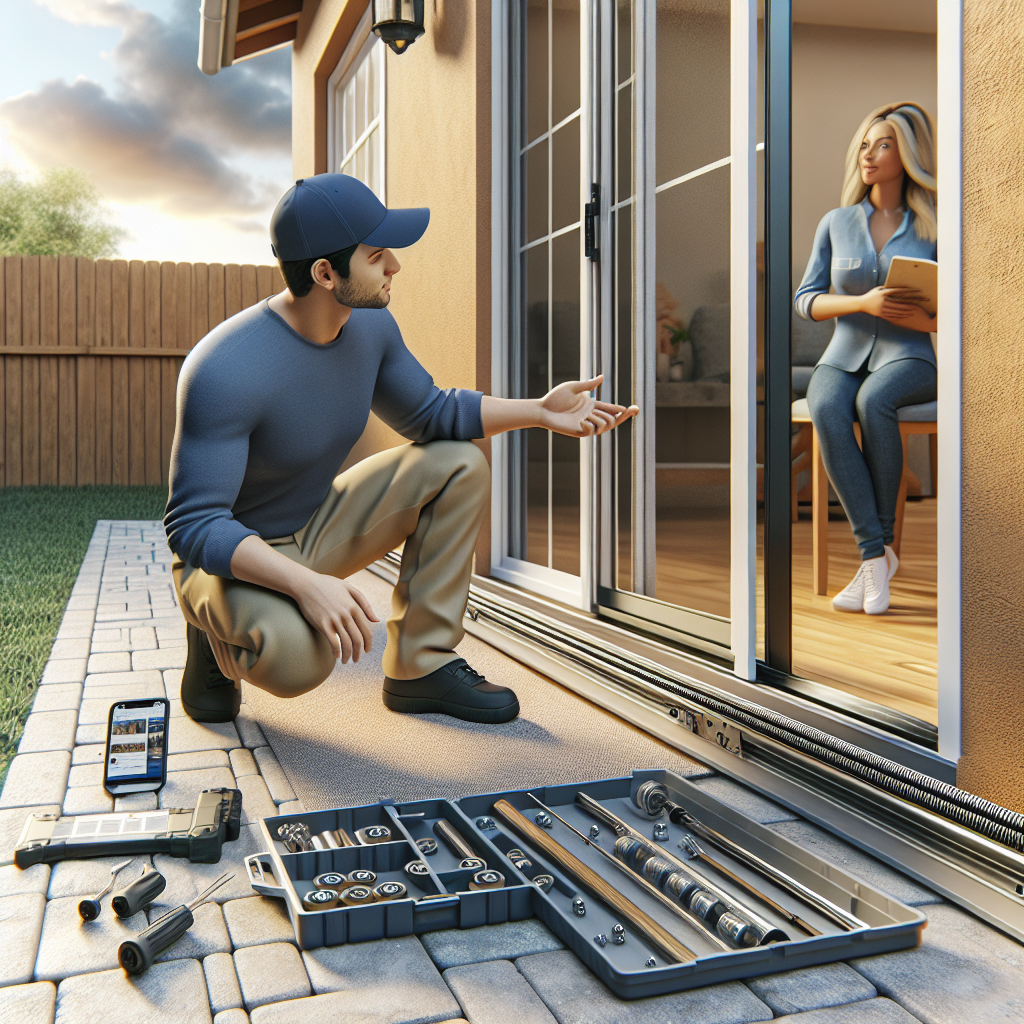
If your patio slider is sticking, grinding, leaking, or has a cracked panel, searching sliding door repair near me is the right first step, but the next move matters. This article gives a quick five-minute diagnostic checklist, a short safe DIY list, and plain guidance on which problems require a licensed technician, plus what to expect during an on-site inspection from R C Windows & Doors in Ocala. You will also find realistic local cost ranges, Ocala-specific storm and humidity considerations, and simple steps to request an inspection or estimate.
1. Quick diagnostic checklist before you call sliding door repair near me
You can rule out or confirm most common problems in under five minutes. Do this first before you call sliding door repair near me so the technician arrives prepared and quoted more accurately.
- Clear the obvious debris: sweep or vacuum the track and look for pebbles, paint chips, or buildup that blocks the rollers.
- Test the motion: slide the door both directions and note whether it sticks at the same spot or drags across the whole run.
- Listen and feel: pay attention to grinding, squeaking, or a rough catch – that points to worn rollers or metal-on-metal contact.
- Inspect seals and sill: check weatherstripping, the bottom sill, and weep holes for gaps or standing water that indicate drainage or sealing failures.
- Check locks and handles: operate the lock and handle several times; if the lock won’t engage or the handle is loose the problem may be hardware not rollers.
- Look at the glass and frame: scan for chips, cracks, fogging inside insulated units, or visible frame separation around the corners.
- Document it: take two photos from different angles and a 10-20 second video of the door sliding — include a short note with the door width and any model or label you can find.
Practical trade-off: a quick cleaning or an accessible adjustment screw can restore smooth motion fast, but that same action won’t reveal internal roller wear or a failing insulated glass unit. Use the five-minute check to save time and money, not to replace the thorough diagnostic an on-site technician will do.
When to stop and call a pro: if the door is heavy to move, lifts off the track, shows visible glass damage, or the frame looks bent or separated, stop. These are safety or structural issues that require a technician and possibly matched replacement glass or track repair.
Concrete example: a West Ocala renter cleared a sticky patio slider of beach sand, vacuumed the track, and snapped pictures for the landlord. A quick adjustment screw turn made the door glide that afternoon; the photos later revealed worn nylon rollers so the property manager scheduled a same-week replacement to avoid repeat failure.
A useful judgment: many homeowners reach first for oil-based lubricants which attract dirt and make sticking worse. In practice, a silicone spray or dry PTFE on the roller surfaces and a clean track will last longer and reduce repeat service calls.
Key takeaway: spend five minutes on the checklist and take photos. That small investment often shortens diagnostic time, lowers the onsite estimate, and helps technicians decide whether same day sliding door repair services or a scheduled visit is the right call. See Family Handyman maintenance tips for a quick reference on regular care.
2. Common causes of sliding door problems and professional fixes
Straight talk: most sliding doors that stick, grind, or rattle are suffering from worn hardware or a compromised track – not mysterious glass failure. A professional inspection isolates the failing component and prevents wasted parts and repeat visits.
Worn or damaged rollers
Symptoms: doors that drag, make a grinding sound, or feel rough when moved usually point to failing rollers. You may also see uneven wear marks on the door bottom or hear metal-on-metal contact when the panel is shifted.
Professional fix: a technician removes the panel, measures the roller assembly, and installs a matching replacement—common choices include nylon or steel-wheel rollers from manufacturers like Prime-Line or C R Laurence. The work includes accurate alignment, load testing, and adjustment so the door tracks true without binding.
Dirty, bent, or damaged tracks
Symptoms: sticking at the same point, shredded brush seals, or visible dents in the track. Floor movement or paint buildup can create low spots that trap rollers and debris.
Professional fix: techs clean and inspect the track, straighten minor dents, and replace sections or the full track when wear is beyond repair. In severe cases the sill and track are re-set to restore drainage and proper alignment; that is not a 15-minute job and often requires returning with replacement parts.
Frame misalignment and settlement
Symptoms: door binds only after months of use, gaps at the lock, or panels that lift when opened. These point to shifting frames, loose anchor screws, or structural settlement rather than a single failed part.
Professional fix: technicians shim and re-anchor the frame, adjust header and sill alignment, and replace anchoring hardware when necessary. If the frame is corroded or twisted, the right call may be a partial or full frame replacement to avoid recurring problems.
Glass, insulated units, and glazing failures
Symptoms: visible cracks, fogging inside the insulated glass unit (IGU), or chips that compromise safety. Tempered panels are common in Ocala and require careful handling.
Professional fix: matched-tempered or IGU replacements are measured, ordered, and installed by certified teams to meet safety and code requirements. Do not attempt to remove or cut tempered glass yourself; professionals handle disposal and replacement and can offer hurricane-rated upgrades when needed. See National Glass Association for glazing standards.
Hardware and lock failures
Symptoms: loose handles, locks that won’t engage, or latch misalignment despite smooth sliding. Security issues are separate from motion problems and need prompt attention.
Professional fix: technicians evaluate whether a cylinder swap, new multipoint lock, or full lockset replacement is required. Often a precise replacement part restores security without changing rollers or track.
Practical trade-off: cheaper aftermarket rollers or quick track patches save money initially but often wear faster and cause repeat calls. Investing in matched parts and proper frame work costs more up-front but reduces downtime and total lifecycle cost—important for rentals and high-use doors.
Concrete Example: a landlord in North Ocala reported a patio slider that stuck near the center. The on-site tech found two worn nylon rollers and a slight track crown from settled flooring; Prime-Line replacement rollers were installed and the track was leveled. The job required panel removal and a one-day return to finish, after which the door glided and the renter reported no further issues for over a year.
Most homeowners misattribute rubbing or noise to the glass. In practice, start with hardware and track assessment — that is where repairs are fastest and least expensive.
If multiple systems fail at once (rollers, track, and frame corrosion), replacement is often more cost-effective than piecemeal repairs.
3. Safe DIY maintenance you can try right now
Start small and inspect first. These three low-risk tasks often restore smooth operation and buy time before a professional visit, but they are strictly maintenance — not replacements for worn rollers, cracked glass, or bent frames.
Cleaning the track and sill
- Tools: vacuum with crevice tool, stiff nylon brush, plastic putty knife, mild detergent, clean rags.
- Step 1: remove loose debris with the vacuum, then scrape stuck grit and dried paint with a plastic putty knife; avoid steel tools that can score the track.
- Step 2: scrub remaining residue with the brush and soapy water, rinse, and dry thoroughly; clear any visible weep holes with a soft pipe cleaner so water can drain.
- Finish: wipe the track dry and run the door back and forth to dislodge remaining grit; only then apply a light coat of silicone spray or dry PTFE to roller faces, not the track surface.
- Safety note: stop if you see deep track dents, metal shavings, or the door lifts off the channel — those signs mean hardware failure and need a technician.
Adjusting accessible roller screws
- What to check: locate the adjustment screws at the bottom edge of the sliding panel (usually behind the trim) and confirm the panel tilts inward a few inches safely.
- Step 1: lift the door slightly while turning the adjustment screw a quarter-turn to raise or lower the roller; test motion after small changes.
- Step 2: aim for even contact along the sill and a smooth glide; align rather than over-tighten — forcing height can bind the panel.
- Safety note: if the panel is heavy, hard to tilt, or the adjustment feels stripped, stop. Panel removal and precision alignment are best left to pros.
Replacing weatherstripping
- Choose the right material: peel-and-stick foam works short-term; EPDM bulb or vinyl pile gives longer life in humid climates like Ocala.
- Step 1: measure the worn section, remove old adhesive residue, and test-fit the new strip before cutting to length.
- Step 2: press firmly along the full length and allow 24 hours for adhesive to cure; for exposed exterior seals consider mechanical fasteners or high-temp adhesive to resist humidity.
- Safety note: if gaps persist after new seals or water still enters during heavy rain, the problem is likely sill or frame related and should be inspected professionally.
Practical trade-off: a tidy track and a correctly set roller screw will often restore serviceable operation quickly, but these fixes mask component fatigue. If motion improves for only a few weeks, plan for a proper roller replacement and alignment to avoid repeated calls and tenant disruption.
Concrete example: a homeowner in South Ocala cleared compacted mulch and paint chips from a sticky patio door, dried the sill, and adjusted the accessible roller screws. The door glided immediately; the homeowner still scheduled a technician after two weeks when a faint grinding returned, which identified a worn wheel that needed replacement.
4. When to call R C Windows & Doors: clear red flags that need a pro
Immediate attention required: call a licensed technician if you see any of the following — broken or cracked tempered or insulated glass, panels that lift off or fall out of the track, a door that won’t lock despite appearing to close, or persistent water intrusion at the sill. These are not cosmetic problems; they involve safety, code compliance, or structural failures that get worse with time.
Why these matter: cracked tempered glass is an immediate hazard and insured losses often hinge on professional replacement documentation; a panel that comes off the track signals frame or roller failure that can damage the header or sill if you keep using it; failed locks are a security liability and may require cylinder or multipoint hardware replacement to meet rental or insurance standards; ongoing leaks rot sills and invite mold and termite problems in Central Florida.
Practical trade-off: emergency temporary measures like boarding or taped glass can secure a home short-term but do not protect against wind-driven rain or meet hurricane glazing requirements. If a fast, temporary patch is needed we will do it, but insist on a follow-up fixed-price estimate for permanent repair — delaying the permanent work increases total cost and can jeopardize insurance claims.
Concrete example: A rental unit in West Ocala had an impact crack after a neighbor’s tree limb hit the patio door. R C Windows & Doors provided same-day boarding to secure the unit, documented the damage for the property manager, and returned two days later to install a matched tempered insulated glass unit with new glazing tape and a water-tight bead. Tenant safety and the insurance paperwork were resolved within a single week.
How we triage repairs in Ocala: technicians assess hazard vs. convenience — life-safety and security issues are prioritized for emergency sliding door repair, roller and track work is scheduled based on parts availability, and code or insurance-driven upgrades (for example impact-rated glass) are quoted separately after measurement. Same-day service is possible when the job is small and parts are on the truck; more complex jobs require an on-site measurement and a short lead time.
If the door compromises safety, security, or causes water entry, treat it as urgent — temporary fixes are acceptable only as a stopgap, not a final solution.
Key takeaway: do not delay professional help for broken glass, doors that come off track, failed locks, or ongoing leaks. Quick documentation (photos + video) speeds triage and helps keep repairs covered by insurance when applicable.
5. What to expect when R C Windows & Doors comes to your Ocala home
Straight answer: a typical on-site inspection runs between 45 and 90 minutes and is built to produce three things: a clear diagnosis, a written repair option that lists parts and labor, and a timeline for when the door will be restored to safe, smooth operation.
On-site process in six steps
- Arrival and safety check: technician parks close, puts on shoe covers, secures the work area, and confirms any immediate hazards such as loose glass or water intrusion.
- Functional testing: the panel is cycled, noise and binding points are recorded, lock and handle operation is tested, and drainage paths are inspected.
- Measure and document: rollers, track profile, and glass are measured; photos and notes are taken for parts ordering and insurance documentation.
- Quick fixes performed if safe: accessible roller adjustments, track cleaning, and hardware tightening are completed on the spot when the correct parts or supplies are already available.
- Quote and options presentation: the technician explains repair choices – from a tune up to a matched glass replacement – provides a written estimate, and notes expected lead times.
- Scheduling and next steps: if parts are required the tech schedules the follow up, explains temporary safety measures if needed, and leaves contact details and warranty explanation.
Three realistic outcomes: small motion issues are often fixed during the visit; roller or hardware replacements frequently require a short return visit when specific parts are needed; matched tempered or insulated glass replacements normally require ordering and a follow up installation with a several day window depending on size and vendor lead time.
Concrete example: a homeowner in East Ocala booked an inspection for a sticking patio slider. The technician spent 60 minutes diagnosing worn nylon rollers and a dented track, completed a cleaning and temporary alignment that afternoon, then returned the next business day with Prime-Line style rollers to complete the replacement and final adjustment.
Practical trade off: insist on the right part rather than a universal quick fix. A universal wheel can restore motion immediately but often wears faster in humid climates and creates repeat service calls. Spending a little more on a matched roller or correct glazing up front reduces downtime and total cost over time.
What technicians cannot reliably finish in one visit: matched tempered glass replacement, major track re-sill work, and full frame replacements. These need measurement, ordered materials, and crew scheduling and therefore require a confirmed return visit.
Expect a written estimate that lists parts, labor, warranty length, and a proposed date for completion. If you need faster service mention emergency sliding door repair when you contact the team.
Before the visit clear the area around the door, move furniture, and have any photos or videos handy. To request an inspection upload images or schedule through R C Windows & Doors contact so the scheduler can match the truck to the job.
6. Local pricing guide and what affects cost in Ocala
Baseline ranges you can expect: for common residential slider work in Ocala, plan on a simple tune-up and cleaning running roughly $75 to $200, single roller replacement or adjustment about $100 to $350 per panel, track repair or re-sill work $150 to $700, insulated glass unit replacement $200 to $800 per panel, and full sliding door replacement from about $800 to $2,500+ depending on size and hurricane rating. These are working ranges, not firm quotes — read on for what makes a specific job move toward the low or high end.Primary variables that change price: door size and weight — larger panels need heavier hardware and sometimes two technicians to lift safely.
- Accessibility and labor time: doors set in high thresholds, tight patios, or second-floor balconies add labor and risk, which increases cost.
- Parts quality and matching: OEM or matched-brand rollers and locksets cost more but last longer; generic wheels are cheaper now and more expensive later in repeat service calls.
- Glass specification: choosing impact-rated or laminated glass can double or triple material cost versus a basic tempered panel and may trigger code paperwork.
- Timing and urgency: same-day or emergency sliding door repair often carries a premium for after-hours scheduling or immediate parts sourcing.
Real-world use case: A homeowner in Silver Springs had a sticking patio door and wanted the cheapest fix. The technician performed a $125 tune-up that afternoon, which restored motion but revealed a cracked nylon wheel requiring replacement. The landlord then chose a matched Prime-Line roller replacement at $285 and scheduled it two days later — total cost was higher than the tune-up alone, but the matched part avoided a repeat call within months.
If your goal is minimal upfront spend for a one-off fix, expect trade-offs: quick cheap repairs often have shorter useful life and raise long-term cost. For rentals and high-use doors, invest in matched parts and correct frame work.
How to get an accurate Ocala estimate: upload photos and a short video and request an on-site measurement. A written quote from R C Windows & Doors sliding glass door repair that lists parts, labor, lead time, and warranty is the only reliable price to budget from — not a phone guess.
7. Preventative maintenance and seasonal checklist for Ocala Florida
Routine maintenance prevents emergency calls. In Ocala you get heavy humidity, pollen, and a defined storm season—those environmental factors change how often you should service sliders compared with drier climates.
Practical trade-off: more frequent, low-cost maintenance (cleaning, silicone lubrication, weep clearing) delays expensive fixes but does not stop parts from failing. For high-use doors or rental units, budget for annual hardware replacement cycles; for owner-occupied doors you can stretch replacements to every 3–5 years if you inspect early and catch wear.
Six-action seasonal checklist (Central Florida focus)
- Quarterly — clean and clear: vacuum the track, remove pollen build-up, clear sill weep holes with a non-metallic pipe cleaner, and dry the sill to prevent standing moisture.
- Quarterly — lubricate cautiously: use a pure silicone spray on roller faces and not oil-based greases on tracks; silicone repels humidity and dust better in Ocala conditions.
- Pre-storm (60–30 days before hurricane season): inspect locks and handles, tighten mounting screws, and test lock engagement; if locks show play, schedule hardware replacement before the storm window.
- Pre- and post-storm — temporary protections: board or shutter only as a short-term measure; do not rely on temporary seals to prevent water intrusion. After storms, prioritize an inspection for glass chips, bent tracks, and sill leaks.
- Annual deep check: measure roller runout, inspect bottom rail for corrosion, and verify IGU integrity (look for fogging); document results with photos for insurance and maintenance records.
- Upgrade trigger list: consider impact-rated glass or upgraded sill drainage when you see repeated water intrusion, visible frame corrosion, or when your insurer or local code requires an upgrade.
Concrete example: A property manager in West Ocala scheduled a pre-storm service in May: techs cleared pollen from tracks, unclogged weep channels, replaced two corroded rollers with nylon-encapsulated units, and tightened the multipoint lock. After a tropical storm the unit had zero water intrusion and the tenant reported normal operation — the preventive visit avoided a same-week emergency call and a temporary boarding job.
A sharp judgment you will not read often: replacing cheap generic rollers as a stopgap increases lifecycle cost in Ocala. Corrosion and humidity accelerate wear on low-quality parts; spend a bit more on matched or corrosion-resistant rollers for doors exposed to weather or heavy use.
Plan two focused visits per year: a pre-storm inspection and an early-summer tune-up. That cadence catches humidity-driven issues and reduces emergency sliding door repair calls.
Local note: weep holes and sill drainage are small features that cause big failures in Central Florida. If water pools after cleaning, schedule a professional sill check; a re-sill or drainage fix is more costly than the annual maintenance you can do yourself.
Next consideration: if you manage multiple units, create a simple log (date, performed task, photos) and book annual inspections with a local pro. For scheduling and to arrange an annual check before storm season.
8. Real Ocala case vignette and call to action
Direct observation: small, repeated sticking complaints in Ocala rentals often hide failing rollers and clogged tracks rather than a glass or frame catastrophe. Ignoring the first squeak or drag turns a cheap tune-up into a same-door replacement later.
West Ocala rental: what actually happened
Vignette: A property manager in West Ocala called after tenants reported a patio slider that stuck halfway open and rattled. On arrival the technician found compacted yard debris in the guttered sill and two visibly worn nylon rollers that had flattened under load. The crew performed a same-day cleaning and temporary adjustment to secure the unit overnight, returned the next morning with matched Prime-Line replacement rollers, removed the panel, installed the new rollers, and completed final alignment and a lock check. The job required two short visits but avoided a glass or frame replacement and restored secure, quiet operation for the tenant within 48 hours.
Practical insight and trade-off: choosing a quick universal wheel or a cheap on-the-spot part will often get the door moving but shortens useful life in humid Central Florida. For rentals and high-traffic patio doors I advise matched or corrosion-resistant rollers up front; the marginally higher material cost usually reduces repeat service calls and tenant disruptions.
Limitation to accept: same-day fixes are realistic only when the right parts are on the truck. Matched tempered or insulated glass, custom sill pieces, and major frame work require measurement and manufacturing lead time, so expect a follow-up visit for permanent repairs when those components are needed.
If you searched sliding door repair near me because a door is stuck or the lock feels unsafe, document the issue and request priority scheduling — broken glass and security failures get emergency attention.
Frequently Asked Questions
Direct reality: when someone searches sliding door repair near me they usually want three things: a fast safety assessment, a clear cost range, and confidence the repair will last. These FAQs focus on practical answers you can use when deciding whether to attempt a simple fix, schedule same-day service, or document a claim for insurance.
How quickly can I get an inspection or same-day service?
Typical timing: non-urgent inspections are often scheduled within a few business days; emergency jobs like broken tempered glass or a door that won’t lock are triaged same-day when possible. Practical note: storms, weekends, and parts availability change lead times.
Can I replace a roller myself and save money?
Short answer: sometimes, but with caveats. If the roller is accessible, the panel is light enough to tip safely, and the replacement part is an exact match, homeowners can replace a roller. Trade-off: universal or generic rollers may restore motion briefly but wear faster in humid, high-use exterior doors – and misaligned DIY installs can damage the track.
Concrete example: a homeowner swapped a visible roller on a closet slider and fixed the glide; the same technique failed on a patio door because the outdoor wheel needed a corrosion-resistant, matched Prime-Line style part. The homeowner scheduled a pro visit to avoid repeating the repair under weather exposure.
Repair or replace – which is cheaper?
Practical rule of thumb: choose repair for rollers, track cleaning, weatherstripping, or single hardware swaps. Replace when the insulated glass unit is failed, the frame is corroded or twisted, or you need impact-rated glazing. Expect lifecycle cost to favor replacement if multiple systems are failing – piecemeal repairs can cost more over time.
Will a local technician replace tempered or insulated glass?
Yes, professionally handled: tempered and IGU replacements require measurement, matched ordering, and safe removal or disposal. Do not attempt to cut or remove tempered glass yourself – that is a safety and code issue.
Does insurance cover sliding door damage after a storm?
It depends: wind or impact damage is commonly covered; wear-and-tear is not. Document damage with timestamped photos and a written estimate to support claims. An experienced local repairer can provide the documentation insurers prefer – ask for an itemized scope and photos at the time of inspection.
How do I pick a trustworthy local sliding door repair near me?
What matters in practice: look for a technician who provides written estimates, shows sample parts, carries liability insurance, and offers labor and glass warranties. Local experience with Ocala climate – weep hole work, corrosion-prone rollers, and hurricane glazing – is a real advantage, not marketing fluff.
Quick checklist before you call: take two photos (whole door and close-up of damage), a 10-20 second video of the motion, note door width and any label numbers on the panel edge, and describe whether the door is a rental or owner-occupied. Upload these with your request at R C Windows & Doors contact to speed diagnosis.
Meaningful judgment: cheap immediate fixes often cost more later. If you need the door secure or watertight, accept that a temporary patch is just that – temporary. Insist on a written plan and warranty for permanent work; it reduces repeat calls and hidden costs.
Concrete next steps you can take now: 1) Run the five-minute diagnostic and capture photos and video. 2) Try only low-risk maintenance like track cleaning or adjustment screw tweaks. 3) If you see cracked tempered glass, the panel lifts, locks fail, or water keeps coming in, immediately request an on-site inspection and note emergency status at R C Windows & Doors contact.