

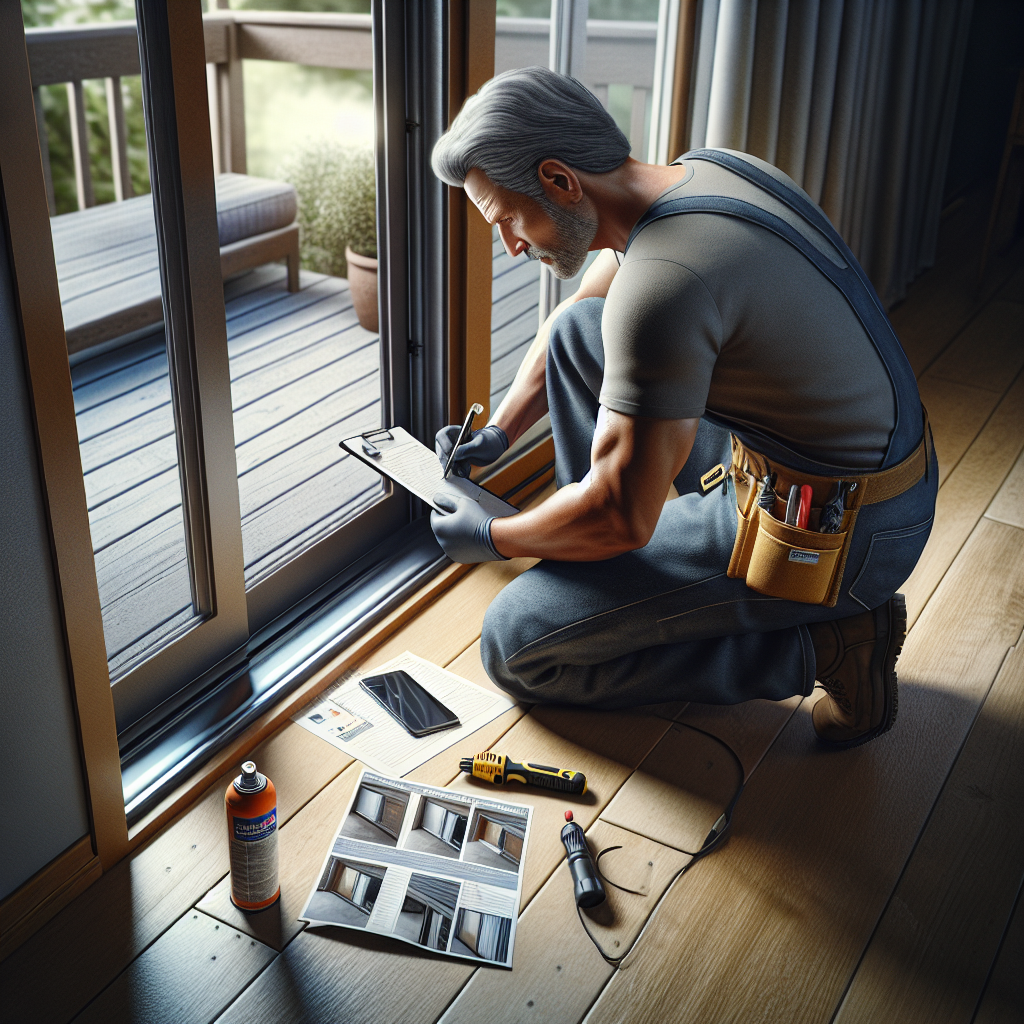
Sliding door glass repair is often either a 30-minute clean and adjustment or a job that requires a professional – guessing wrong risks more damage and a security problem. This guide gives Ocala homeowners and property managers a short diagnostic checklist, safe quick fixes you can try with common tools, and plain rules for when glass or hardware needs replacement. You will also get realistic local cost and timeline expectations and a simple maintenance plan to keep sliders running smoothly in Marion County.
Quick diagnostic checklist for sliding door problems
Start with a three minute scan. A focused, systematic check will tell you whether the problem is simple debris, an adjustable roller, or something that needs professional service.
Quick walk-around tests (do these in order)
- Full travel test: Slide the door from locked to fully open and back while listening closely for grinding or sticking at a single location.
- Edge lift test: With the door closed, lift the edge nearest you about 1 inch. If travel improves or the door drops when released, worn rollers are a likely cause.
- Track inspection: Shine a flashlight into the bottom track – look for grit, paint buildup, bent metal, or standing water in the weep holes.
- Lock and strike check: Try the lock while the door is slightly open. If the latch misses the strike plate, the problem is alignment not glass.
- Glass and glazing check: Tap the glass gently and listen for a hollow rattle or check for visible cracks, chips at the edge, or fogging inside an insulated unit.
- Weatherseal and screen: Press the perimeter seal and move the screen. Damaged weatherstripping or a binding screen often looks like a mechanical failure.
Practical tradeoff: Cleaning and adjustment often restores smooth operation if the track and rollers are intact. If the track is bent or the sash is warped, repeated adjustments waste time and may damage new rollers – plan for hardware replacement or sash replacement instead of chasing adjustments.
Symptom to probable cause – what to look for next
- Door sticks at one spot: Check for a dent or debris in the track and inspect the rollers for a flat spot.
- Door tilts or scrapes along entire run: Rollers are uneven or one side is seized – test by lifting the sash and observing wheel movement.
- Grinding noise: Metal-on-metal contact from a bent track or a disintegrating roller bearing – do not lubricate to hide the sound, find the failing part.
- Rattling glass or wobbly sash: Loose glazing clips or broken spacers inside an insulated glass unit – this is a glass or sash issue, not a roller issue.
- Lock does not engage: Strike plate misalignment or worn latch – small adjustment can fix security without replacing glass.
Concrete example: A property manager in Marion County reported a slider that stuck halfway. The on site check found a build up of pollen and a slight crease in the aluminum track from a lawnmower hit. Technicians cleaned the track, replaced one worn roller with a CR Laurence replacement, adjusted roller height, and the door regained full travel the same day.
Do not attempt to cut or remove tempered glass yourself. Call a licensed local specialist for any glass removal or replacement.
Key action: If the edge lift test shows smooth travel when lifted, plan to replace rollers or the bottom sash. If cleaning does not improve operation or you hear grinding, schedule professional sliding door glass repair or sliding door track repair to avoid further damage.
Next consideration: If this checklist narrows the fault to rollers or track but the frame shows corrosion or bending, get a written estimate for parts and labor before buying parts – buying the wrong rollers or attempting a partial repair often costs more in repeat visits. Regular maintenance extends service life; see Family Handyman for basic upkeep tips.
Safe quick fixes homeowners can try today
Basic tools and a safety checklist
Essentials first: gather a small vacuum or shop-vac nozzle, a stiff nylon brush, silicone spray, a 1/4 and 3/8 inch screwdriver, and a flashlight. Wear work gloves and eye protection and keep the area clear of children and pets. If the sash is heavy or the glass is cracked, stop and call a pro.
Clean the track without damaging the frame
What to do: remove loose debris with a vacuum and brush, then clear the weep holes using a small pick or compressed air. Follow with a damp microfiber to lift fine grit. Cleaning is usually a 20 30 minute job that restores most bindings caused by dirt or pollen.
Trade-off to note: deep scrubbing or harsh chemical cleaners can strip anodized finishes on aluminum frames. If the track shows pitting or bent metal after cleaning, stopping and getting a written estimate is cheaper than continuing to adjust rollers around a damaged track.
Lubrication that helps rather than hurts
Use silicone spray sparingly. Silicone keeps dirt from sticking; white lithium attracts grime over time. Spray a light film on roller bearings and the top and bottom of the sash, then move the door back and forth to work it in. Do not use WD-40 as a permanent lubricant – it is a solvent, not a long-term solution.
Adjust rollers — small turns, clear effect
Adjustment method: locate the adjustment screw at the bottom edge of the sash and turn clockwise to raise, counterclockwise to lower. Make quarter-turn changes and test travel after each. If the door becomes harder to close or the latch fails to align, reverse the last adjustment. Overadjusting can bind the sash or wear out new rollers.
Practical limitation: replacing or adjusting rollers works only if wheels and housings are intact. If the wheel is flat, the bearing is seized, or the track is visibly bent, swapping rollers may be wasted effort without addressing the root cause.
Tighten hardware and realign the strike plate
Quick fix: tighten loose screws on the lock assembly and hinge points, and slightly loosen the strike plate to slide it into alignment before re-tightening. Small alignment shifts often restore secure locking without replacing parts. If the strike plate is stripped or the frame is cracked, that requires professional repair.
Short-term measures for cracked or chipped glass
Temporary security: for a hairline crack that does not compromise the opening, apply clear glazing tape over both sides to hold shards and reduce wind noise, then cover with a cut piece of 1/4 inch plywood secured from the inside if necessary. This is a stopgap only; shattered or compromised glass must be handled by licensed technicians for safety and code compliance.
Concrete example: a homeowner returning from a week away found a chip at the corner of their patio slider caused during a yard cleanup. They vacuumed the track, applied a light silicone spray, raised the sash a quarter turn on the rollers, and taped the chip. The door operated smoothly enough to secure the unit until an appointment was scheduled with a local sliding glass door repair service to replace the insulated glass unit.
If you need parts: reputable roller options include Prime-Line and CR Laurence; match part numbers to your sash profile before buying. Buying the wrong roller is a common, avoidable expense.
Key action: Try cleaning, light silicone lubrication, and one cautious roller adjustment first. If you still hear grinding, see metal deformation, or the sash is heavy to lift, arrange professional sliding door glass repair or track replacement rather than continuing DIY attempts.
When quick fixes are not enough: hardware replacement options
Straight truth: if cleaning, lubrication, and small adjustments only buy a few weeks of smooth travel, the hardware itself is the problem and replacement is the pragmatic next step. Common replacements address failing roller assemblies, worn bottom sashes, damaged track sections, and lock/strike hardware; each solves a different root cause and carries different costs, disruption, and longevity.
How to choose between replacing rollers, sash, or track
Practical test before you buy parts: lift the sash to check wheel rotation, inspect the track for creases or pitting, and photograph the roller housing and extrusion profile. If wheels spin freely and the track is straight, replace the rollers. If wheels bind or track shows deformation, replacing rollers alone is a temporary fix.
| Replacement option | What it actually fixes | Trade-off / when to pick it |
|---|---|---|
| Roller assembly replacement | Worn wheels or seized bearings causing uneven or jerky travel | Least invasive and quickest. Choose when track and sash are straight and frames are structurally sound; may fail quickly if the track is damaged |
| Bottom sash replacement (sash with glass) | Warped sash, damaged glazing, or insulated glass unit problems | More expensive but restores alignment and allows glass upgrades (tempered/laminated). Best when sash is bent, insulated unit is fogged, or multiple rollers have failed |
| Track repair or replacement | Bent, corroded, or scored track that causes grinding or premature roller wear | Most disruptive. Necessary when metal deformation is present; prevents repeated roller failures but can require realignment of the entire frame |
| Lock and strike replacement | Security and latching failures where alignment adjustments won’t hold | Low cost and quick; choose this when the sash aligns but won’t latch securely |
Trade-off to accept: cheapest fix is not always cheapest long term. Replacing rollers on a bent track is a common false economy — you get immediate improvement, then another failure when the new wheels wear into the same damaged track. Spending more once on track or sash replacement often cuts callbacks and total cost over two years.
Concrete example: an Ocala landlord repeatedly bought roller kits for a condo slider that kept failing. A technician found the track had a hairline crease from a mower strike; after replacing rollers three times the landlord authorized a welded track repair and a new bottom sash. The one-time higher cost eliminated the recurring service calls and stopped tenant complaints about the door sticking.
If replacement rollers fail within a few months, assume the track or sash alignment is faulty — replacing rollers again is throwing money at a symptom, not the cause.
Before ordering parts: measure wheel diameter and housing profile, take clear photos of the bottom edge and track, verify whether the insulated glass unit needs removal, and check local requirements for safety glazing. If you want help matching parts or scheduling service.
Glass damage and replacement: safety, code, and material choices
Clear rule: visible cracks, shattered edges, and fogged insulated glass units require replacement rather than adjustment. Repairing hardware while leaving compromised glass in place risks injury, a failed lock, and code violations that will create problems at resale or with insurance.
IGU replacement versus full sash replacement
Practical distinction: replacing only the insulated glass unit saves money and time when the frame and sash are straight and the glass spacing and spacer type are acceptable. A full bottom sash replacement is the right choice when the extrusion is bent, glazing stops are corroded, rollers and weatherseal need renewing, or when you want a different safety or hurricane rating.
Trade-off to weigh: IGU replacement is economical for fogging or thermal failure but it does not fix bent tracks, warped sashes, or leaking frames. Spending more up front on a new sash or upgraded laminated glass often prevents repeat service calls and protects tenants or family better during storms.
- Annealed glass: cheapest, breaks into large shards – not acceptable where code requires safety glazing.
- Tempered glass: required in many sliding door locations under Florida rules because it breaks into small, less dangerous pieces – good for most patio sliders.
- Laminated glass: holds together when struck and reduces forced entry and noise – the better choice for hurricane exposure or high security needs.
- Insulated units with Low-E or argon fill: improve energy performance; if energy efficiency matters choose a factory fabricated IGU rather than a field glazed single pane.
Field glazing versus factory glazing: a field replace IGU may look like savings but often brings seal failures, improper spacer selection, and voided warranties. Factory fabricated IGUs are the safer, longer lasting option when energy performance or a warranty matters.
Regulatory note: sliding doors that qualify as hazardous locations must use safety glazing. Verify project requirements with Florida Building Code before ordering glass or approving a repair so you do not end up with a noncompliant replacement.
Concrete example: a duplex owner in Marion County had a patio slider with a fogged IGU and slightly bent bottom rail. Technicians replaced the IGU for the tenant to restore thermal performance, then recommended a scheduled sash replacement the next off season to correct the rail and upgrade to laminated glass for improved storm performance.
If the glass unit is cracked, edge chipped, or the IGU shows condensation between panes, treat the opening as compromised and plan for professional replacement rather than continued patching.
Key action: Check whether you need tempered or laminated glazing for your location, choose factory fabricated insulated units when energy performance or a warranty matter, and schedule a professional on site inspection.
R C Windows & Doors professional service process for sliding door repair
Straight to the point: R C Windows & Doors runs sliding door jobs like a small medical practice — diagnose first, treat with the correct part, and document outcomes. That approach avoids common callbacks where a quick roller swap fails because the track or sash was the real problem.
How the service flow actually runs
- Request and triage: Phone, web form, or text photos start the process. Sending clear pictures of the door bottom, lock, and any visible glass damage speeds up the initial estimate and often narrows the likely fixes before the visit.
- On-site diagnostic: A technician performs a focused inspection of track geometry, roller rotation, sash framing, and the glass unit. Expect measurements, test lifts, and a short demonstration of the fault so you see the problem rather than take a guess.
- Written options and pricing: You receive tiered choices — quick adjustment, hardware replacement, sash replacement, or IGU fabrication — each with cost, timeline, and trade-offs spelled out in writing.
- Parts and scheduling: For standard roller or lock jobs, most repairs are completed the same day if parts are onboard. For custom insulated glass units, the techs will secure the opening and schedule fabrication with a clear install date.
- Repair, verification, and cleanup: Work includes installation, alignment, seal replacement if needed, operation tests, and debris removal. Technicians verify smooth travel, lock engagement, and proper weep drainage before leaving.
- Paperwork and warranty: Job documentation, care instructions, and warranty information are provided. If a larger job is needed later, measurements and photos taken on day one shorten follow-up visits.
Practical limitation: If the sash is warped or the track is bent, a same-day roller swap can only be a stopgap. In those cases R C Windows & Doors will secure the opening and return with fabricated parts; accepting a temporary fix knowingly reduces cost now but usually raises total cost over a year.
What you should expect on site: Two-person crews for glass work, single technician for small hardware jobs. They bring suction lifters, a selection of branded roller kits, a cordless impact, and materials for temporary security. Work typically takes 30 minutes for adjustments, 1–3 hours for hardware swaps, and a scheduled return for IGU installs.
Judgment call you won’t hear from every contractor: Insisting on a lowest-cost immediate fix is often false economy. Professionals who document frame condition and recommend sash or track replacement reduce repeat service calls. If a quote looks unusually low for a complete fix, expect a follow-up bill.
Concrete example: A rental property in Ocala sent photos of a scraper mark and a grinding noise. The tech confirmed a creased track and replaced one roller to restore movement the same day, then quoted a welded track repair and new bottom sash for the following week. The tenant had a working door immediately and the owner avoided repeated service calls by approving the more durable repair.
If you want faster estimates, send clear photos of the door bottom, the lock area, and any glass damage before booking. This speeds diagnosis and avoids unnecessary trip charges.
Key action: Expect a written estimate with clear options and a warranty. For Ocala-area service or to upload photos for a faster quote.
Cost expectations and timeline for common repairs in Ocala
Bottom line up front: Ocala sliding door jobs typically fall into three practical buckets — same-day tune-ups, short-wait hardware swaps, and longer-lead glass or sash work — and each bucket has very different cost and scheduling consequences you should plan for.
| Repair category | Typical turnaround | Typical homeowner range (Ocala) | Common causes of delay |
|---|---|---|---|
| Quick service: track cleaning, lubrication, small adjustments | Same day to 1 business day | $40 – $120 | Technician schedule, high pollen season demand |
| Parts replacement: rollers, locks, minor sash repairs | 1 – 5 business days (often same day if stocked) | $125 – $450 | Correct roller/profile match, backordered OEM parts |
| Glass work: IGU replacement, tempered or laminated glass, full bottom sash | 5 – 14 business days (factory fabrication common) | $600 – $3,000 | Custom glass fabrication, hurricane-rated specs, permit checks |
| Full sliding door replacement (frame, new unit) | 7 – 21 business days | $1,200 – $4,000 | Unit lead time, site prep, structural repairs |
Practical insight: the single biggest cost driver in Ocala is parts fit and availability. Matching the extrusion profile and wheel diameter matters more than brand — a wrong roller or nonmatching sash profile turns a cheap repair into multiple service calls and higher labor totals.
Trade-off to weigh: choosing a same-day quick fix is reasonable when the problem is dirt or a seized wheel, but if the frame shows bends or you hear metal-on-metal grinding, a temporary fix lowers immediate cost at the expense of likely repeat service and greater total spend over time.
Concrete example: An Ocala homeowner called about a slider that scraped loudly. A technician cleaned the track and replaced a single worn roller for about $95 the same day, restoring operation. Two weeks later the door began to bind again because the bottom rail was creased; the owner elected a factory IGU and bottom sash replacement for roughly $1,250 with a 10-day lead time. The initial save turned into a larger job because the frame damage was missed.
Seasonal and administrative realities: expect longer timelines during spring pollen and late summer hurricane prep when demand for glass and hurricane-rated glazing rises. Insurance claims or requests for hurricane-spec laminated glass add approval steps and can push fabrication to two weeks or more. Plan schedules around those windows if you can.
Cheaper is not always faster: the lowest quote for a quick roller swap often excludes the work needed if the track or sash is damaged. Demand written options that show short-term fixes and the permanent solution with separate pricing.
Key action: Get a documented estimate listing the immediate repair, a recommended permanent option, lead times, and warranty. For a faster quote in Ocala, upload photos of the door bottom, lock area, and any glass damage at sliding glass door repair or contact the team at contact.
Next consideration: before approving any work, ask for the parts list and expected return visits; if the quoted permanent fix requires factory glass or a baked-in hurricane rating, budgeting the longer lead time now prevents rushed, costly follow-ups later.
Preventive maintenance checklist for longer lasting smooth operation
Small, regular maintenance prevents most service calls — but only if you catch alignment and frame damage early. A monthly visual plus a few targeted actions each quarter will keep rollers and tracks out of failure territory; neglect lets a minor crease or seized bearing turn into a full sash or IGU job.
Schedule and acceptance criteria
- Monthly quick check: Run the door full travel, listen for new grinding, glance at tracks and weep holes. Acceptance: door moves smoothly across the full run and lock engages cleanly.
- Quarterly service: Vacuum track, clear weep holes, wipe with a damp microfiber, and remove visible grime from roller housings. Acceptance: no grit remains in the low spots and the door slides with a consistent feel.
- Twice-yearly tune-up (spring and fall): Lightly spray silicone lubricant on rollers and sash contact points, tighten latch screws, and test roller adjustment screws with small quarter turns. Acceptance: roller wheels spin freely and elevation matches so the latch seats without forcing.
- Annual inspection: Check for corrosion, bent rails, or sash twist; photograph bottom rail and roller housings and measure wheel diameter if you suspect future part purchases. Acceptance: frame is plumb and track profile is straight; if not, budget a professional inspection.
Practical trade-off: using silicone spray regularly is cheaper and cleaner than white lithium, but it does not fix a bent track. If you find repeated binding after maintenance, stop doing incremental fixes and schedule a paid diagnostic — continuing to lubricate a deformed track accelerates roller wear and costs more long term.
Record keeping that pays: keep a one-page log with date, action (clean, lube, adjust), wheel diameter, and photos of the bottom rail. When you call a pro, those measurements save time and prevent ordering the wrong roller profile — which is the single most common cause of repeat visits.
Concrete example: After a wet spring, an Ocala homeowner added quarterly track checks to their calendar. On the second inspection, they spotted pollen sludge beginning to cake in the weep channel and cleared it before rollers developed flat spots. The door never needed a roller replacement that year and passed a tenant move-out inspection with no glazing or alignment complaints.
Tip: Photograph the door bottom and the roller housing before you touch anything. Clear photos speed remote quotes and prevent buying the wrong replacement parts.
Key action: Treat maintenance as prevention and triage. If cleaning and light adjustment do not restore smooth travel, schedule professional sliding door glass repair or track service rather than repeating temporary fixes. For local service or to upload photos for a faster quote.
How to choose a qualified sliding door repair contractor in Ocala
Start with proof, not promises. The single best predictor of a reliable repair is verifiable credentials and a documented process, not a low price or a friendly phone call. Ask for the basics up front and treat vague answers as a red flag.
Critical verifications to request before you book
License and insurance: Confirm a Florida contractor license and active general liability insurance. If glass replacement is involved, verify the tech carries glazing-specific coverage.
Written, tiered estimates: Demand a short-form estimate that lists at least two options (quick fix vs permanent repair), parts or glass types proposed, labor, and warranty terms. A responsible contractor documents the diagnostic findings and explains trade-offs rather than selling the cheapest immediate fix.
Parts and code compliance: Ask whether proposed glass will meet local safety glazing requirements (tempered or laminated) and which brands or part numbers will be used. Contractors who avoid naming materials or who say they will decide on site are often trying to hide lower-quality parts or noncompliant solutions.
- Local references: Request recent Ocala or Marion County jobs and, if possible, contact one client. Local experience matters because of our climate and code quirks.
- On-site demonstration: A good tech will reproduce the fault, show the failing component (worn roller, bent track, or compromised IGU), and explain options.
- Warranty and cleanup: Confirm how long workmanship and parts are warranted and how they dispose of broken glass and old parts.
- Payment terms: Avoid contractors insisting on large deposits for routine repairs. Standard practice is small deposit for custom glass, balance on completion.
- Turnaround expectations: Get lead times for both emergency securing and permanent repairs; same-day temporary fixes should come with a written plan for the permanent fix.
Practical trade-off: Choosing the lowest bid can be false economy. Fixing rollers on a bent track is a common short-term save that creates repeat calls. Pay for a solid diagnostic and documented permanent option when frame damage or safety glazing is involved.
Concrete example: An Ocala homeowner received two quotes after a patio slider developed a hairline crack and rough travel. Company A offered an immediate IGU swap only; Company B performed a measured inspection, demonstrated a bent bottom rail, and recommended full bottom sash replacement with laminated glass to meet local safety needs. The homeowner paid more up front to avoid two service visits and unexpected code issues when selling the house two years later.
If a contractor refuses to put the scope, parts, and warranty in writing, treat that as a deal-breaker.
Key action: Take photos of the door bottom, lock area, and any glass damage and upload them when requesting a quote. This speeds diagnosis and reduces the chance of ordering wrong parts. For Ocala service and photo uploads, see sliding glass door repair.
Final judgment: Prioritize contractors who combine local licensing, clear written options, and a willingness to demonstrate the failure on site. That combination reduces repeat calls, ensures code-compliant glass work, and gives you a defensible record for insurance or resale — exactly what matters more than a cheap headline price.
Frequently Asked Questions
Direct point: an FAQ is useful, but answers cannot replace a short on-site inspection. Many questions hinge on the same two facts: whether the problem is hardware or glass, and whether the frame is straight. If those two checks are unresolved, any estimate is provisional.
Concise answers homeowners actually need
Can I replace a broken roller myself? You can replace many roller assemblies if you are handy and the sash lifts easily, but heavy sashes, warped frames, or seized housings turn a DIY job into a safety and repeat-visit problem. If the sash is bulky, have a second person or call a pro to avoid dropping the glass and damaging the frame.
How to know if the glass needs full replacement? Visible cracks, edge chips near the frame, fogging inside an insulated glass unit, or compromised safety glazing mean replacement. Trying to mask a cracked or delaminated IGU with tape or sealant is a temporary stopgap that can invalidate insurance claims and create hazards.
What is a realistic lead time for insulated glass in Ocala? Factory-made IGUs typically take several business days to a couple of weeks depending on specs and hurricane-rated requirements. If you need same-day security, professionals will temporarily secure the opening and schedule the IGU install for the earliest available fabrication slot.
Will insurance cover sliding door glass replacement? Insurance often covers sudden damage from vandalism or a storm but not wear and tear or improper maintenance. Keep dated photos, an itemized contractor estimate, and the technician’s diagnostic notes to support a claim — undocumented DIY tapes and temporary fixes weaken your position.
Is tempered or laminated glass required in Florida? Many sliding door locations are governed by safety glazing rules under the Florida Building Code. Expect contractors to recommend tempered or laminated units for code compliance; if a quote avoids naming glass type, get clarification in writing.
What happens during an R C Windows & Doors on-site inspection? Technicians will test sash lift, measure wheel diameter, photograph the bottom rail, and reproduce the fault so you see it. They provide tiered written options — quick adjustment, hardware swap, sash replacement, or IGU fabrication — with trade-offs and warranties spelled out.
Practical trade-off: opting for a same-day roller swap can be the right short-term choice when pollen or grit is the culprit. If the track shows deformation, however, that cheap fix becomes recurring cost. Spend a little more on a proper diagnostic to avoid repeated service calls.
Concrete example: A landlord taped a corner chip and kept replacing rollers every few months to quiet a noisy slider. After documenting the failures, a technician found a bent bottom rail; the landlord approved a welded track and bottom sash replacement which eliminated the recurring calls and tenant complaints within one repair cycle.
When to call emergency glass repair: any shattered pane, exposed jagged edges, or a door that will not secure should be treated as an emergency. Professionals provide temporary boarding or glazing the same day, then schedule permanent IGU or sash work.
Final takeaways — actionable next steps: 1) Photograph the door bottom, lock area, and any glass damage now; 2) Try a quick clean, light silicone spray, and one cautious roller adjustment only if the sash lifts easily; 3) If you see bent metal, hear grinding, or the glass is cracked, schedule a professional inspection and get a written, tiered estimate (include glass type and lead time). For Ocala-area service or to upload photos for a faster quote, visit sliding glass door repair or see glass replacement.