

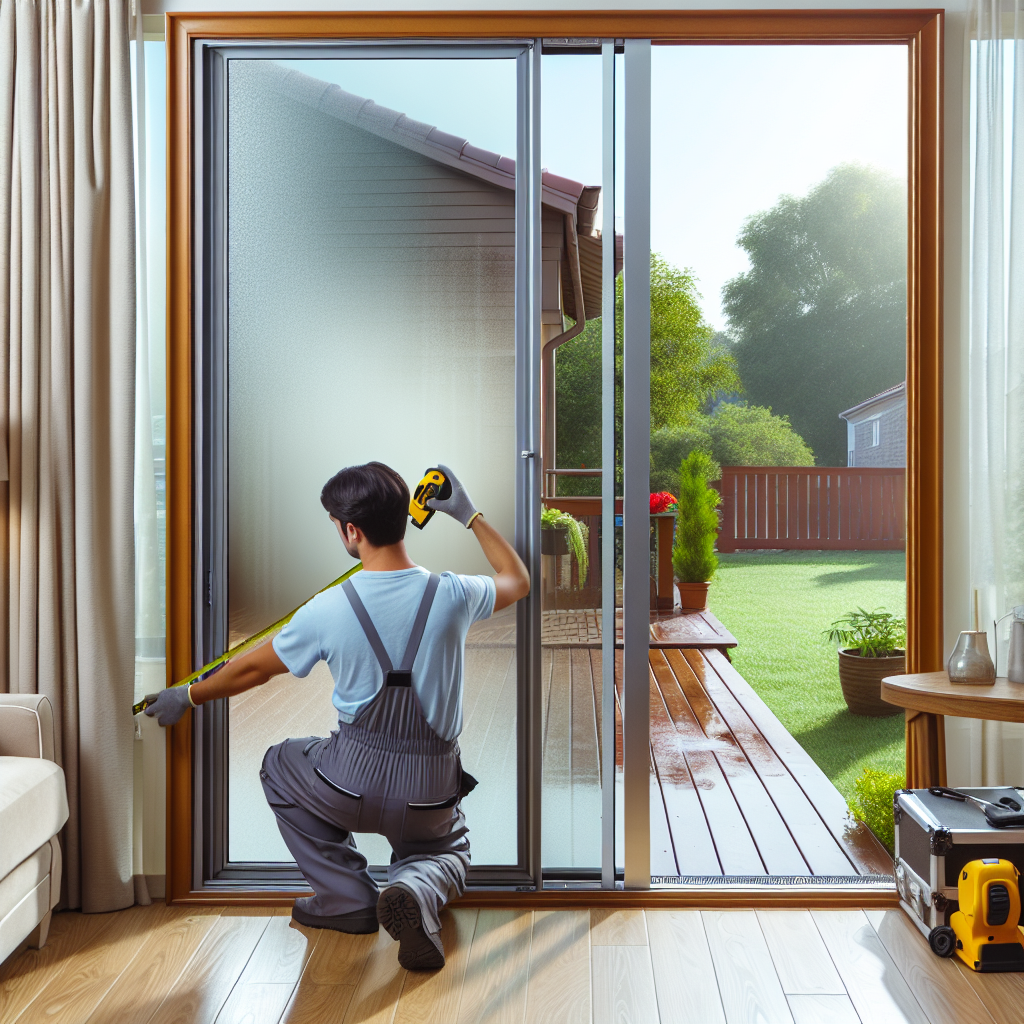
When your sliding patio door fogs, sticks, or cracks, deciding between glass door repair and full replacement can feel costly and confusing. This practical guide for Ocala homeowners and property managers lays out symptom-based decision rules, realistic cost and timeline ranges, hurricane-code considerations, and what to expect when you bring in R C Windows & Doors.
Decision checklist: Repair or replace based on symptoms
Start with the symptom, not the sentiment. If the door still seals, opens and locks safely, and the frame is square, repairs usually win. When any one of those fundamentals fails — safety, weather seal, or structural alignment — replacement becomes the sensible option.
Practical symptom-to-action rules
- Fogging between panes: Replace the insulated glass unit (IGU). Fogging means the IGU seal failed; nothing short of a new IGU restores thermal performance and clarity.
- Single small chip or edge nick: Repairable if isolated. A corner chip on tempered glass or a stress crack near the edge usually requires replacement of that pane because stress concentrates there.
- Hairline crack under 4 inches and away from edges: Possible glass cut-and-replace only. Short cracks in annealed, non-tempered panes can sometimes be cut out and replaced; tempered glass always needs full pane replacement.
- Crack longer than 6 inches or crossing multiple panes: Replace the entire sash or unit. Large cracks compromise safety and often signal age-related weaknesses in the frame or glazing system.
- Door sticks, drags, or is hard to open/close: Repair rollers, tracks, and weatherstripping first. If the frame is bent or the sill is cracked, schedule a replacement — repairs will be temporary and costlier over time.
- Repeated seal failures or multiple fogged units: Replace sashes or full units. Recurring IGU failures usually point to rim or spacer corrosion or poor drainage — a band-aid IGU swap wastes money.
- Rot, corrosion, or bent frame members: Full replacement. Compromised frames risk leaks and misalignment; installing new glass into a damaged frame invites faster failure.
- Impact damage that breaks glass or distorts frame: Replace with code-compliant product. In Florida, post-impact work often triggers hurricane-code upgrades; consult your contractor and insurer.
Trade-off to weigh: Repair saves money short-term but can cost more if the underlying frame, sill, or drainage is failing. Replace when recurring repairs exceed roughly 40-50 percent of the replacement cost within two years, or when the door affects security or energy bills materially.
Concrete example: A tenant reports a fogged sliding patio door plus a two-inch crack at the corner. The technician finds a failed IGU and beginning corrosion on the bottom rail. The right call is IGU replacement only if the rail can be repaired and the sill drains properly; if the rail shows rot or the sill is bent, quote a sash or full unit replacement and document the code and hurricane upgrade options.
If safety, secure locking, or code compliance is in doubt, choose replacement — cheap repairs are a false economy when glazing affects egress or hurricane protection.
What to send before a visit: Photos of the whole door, close-ups of damage (include a coin or ruler for scale), a shot of the bottom sill from outside, and the lock area. Upload these when you request an estimate — good photos speed accurate triage and reduce unnecessary truck rolls.
Key takeaway: Match the fix to the failure. Replace IGUs for fogging, repair hardware for operational faults, and replace the unit when frame integrity, safety, or code compliance is compromised.
Next consideration: If your property is in an area with hurricane risk, factor in upgrading to impact-rated glazing or a code-compliant replacement when you reach the replacement decision. See Florida Building Code guidance and ask for Miami-Dade approved options in your estimate.
Common glass door problems and specific repair options
Straight to the point: most glass door service calls fall into three practical categories — glass breakage, glazing failures, and operational/hardware faults — and each category has a different set of viable fixes and failure modes to watch for.
Glass breakage: pane swaps, tempered rules, and upgrades
What to expect for broken panes: a single cracked or shattered pane is normally replaced rather than patched. Tempered glass cannot be cut in place; its replacement requires ordering the correct tempered unit and removing the sash or sash glass. When a pane is near a door edge or a high-stress area, replace it with tempered or laminated glass — laminated buys you safety and sound control but costs more.
Practical trade-off: choosing laminated or impact-style glazing at pane-replacement time increases the upfront cost but avoids another trip if safety or hurricane code is a concern later. If you live near coastal Marion County neighborhoods, plan for the upgrade when replacing broken panes.
Insulated glass unit (IGU) seal failure and repeat fogging
Why fog returns: fogging between panes means the IGU seal failed and the unit lost its desiccant. Replacing the IGU restores clarity and thermal performance but will fail again quickly if the sash perimeter, drainage, or spacer is corroded. Always inspect the rail and sill before authorizing IGU-only work.
Real-world example: a homeowner in Ocala reported persistent fogging on a living-room sliding door. The technician replaced the IGU, documented salt-corrosion at the spacer, and advised a sash rehab. The short-term fix improved comfort, but the contractor quoted sash replacement as the durable solution — the client accepted the phased approach to spread cost.
Rollers, tracks, locks, and weatherproofing — quick wins and limits
Fast, effective repairs: worn rollers, seized locks, and compressed weatherstripping are the most cost-effective repairs. Replacing rollers and re- aligning the track often restores smooth operation in a single visit and is the right first step for rental units or when budget is tight.
When quick fixes fail: if a door still sticks after new rollers, inspect the track and frame. A bent sill, sub-sill rot, or out-of-square frame are structural problems; continuing to replace rollers turns into wasted maintenance. In those cases, plan for sash or full-frame replacement.
Hardware compatibility note: common brands like Andersen and Pella have specific hardware families; a technician should match replacements to the brand or choose compatible aftermarket parts. Using the wrong cam or keeper fixes the symptom but can compromise lock security.
Custom doors and special glazing: for custom glass doors, tempered and laminated options differ in how they fail and in installation complexity. Tempered glass provides predictable break patterns; laminated keeps fragments in place. Impact-rated laminated assemblies are the only route if you need Miami-Dade-approved protection — otherwise you are buying limited benefit for inland properties.
Key takeaway: match the repair to the root cause. Replace panes or upgrade glazing when safety, code, or long-term durability matter; use rollers, track work, and weatherstripping for operational fixes — but stop and reassess if structural issues show up during the repair visit.
When replacement is the right choice and what replacement includes
Direct rule: replace when the structural parts that make the door work are compromised, not just the glass.** If the sill, sash, or frame is bent, corroded, water-damaged, or unable to accept impact-rated glazing, swapping panes is a short-term fix that returns sooner than you expect.
Replacement scopes and the tradeoffs you need to weigh
Glass-only replacement: replaces the glazed panel or IGU and is fastest, but it assumes the sash perimeter, spacer, and drainage are sound. Use this when the frame is square, weather seals intact, and there is no visible corrosion.
Sash replacement: replaces the moveable sash or panel assembly while keeping the existing frame. This is a middle ground that repairs recurring glazing problems or damaged rails without the mess of a full-frame job. The tradeoff is compatibility: new sash profiles must match the old frame, and sometimes hardware will not line up.
Full-frame replacement: removes the whole unit and installs a new frame and door. It is the correct choice when the unit fails to meet current hurricane or structural requirements, when water intrusion has rotted surrounding framing, or when you want an energy or performance upgrade. It costs more and takes longer, but it closes the loop on recurring problems and can simplify insurance and permit work.
- Hardware and fit: Transferring old locks, handles, and rollers may save money but can void manufacturer warranties or cause alignment issues; expect some hardware to be replaced.
- Code and impact upgrades: If you want impact-rated glazing or Miami-Dade approval, a full-frame or sash swap is often necessary because glass-only changes rarely meet structural anchorage requirements.
- Hidden repairs: Replacements commonly uncover rot, insulation gaps, or failed flashing that must be corrected before finishing — budget for remediation, not just the visible unit.
What a professional replacement job includes (and what it does not)
Typical inclusions: removal and disposal of the old unit, delivery and installation of the new panel or unit, new weatherproofing and flashing at the exterior, threshold and sill work as needed, reinstallation or replacement of compatible hardware, cleanup, and an itemized invoice with warranty information.
What to confirm before you sign: ask for the product model and performance specs, whether the glazing carries a visible approval label (for impact glazing), who holds the permit if required, and the length and scope of both manufacturer and workmanship warranties. Insist that flashing and sealant details are written into the scope — poor sealing is the most common installation failure.
Practical limitation: custom sizes and special finishes introduce lead time. If your door is nonstandard or you specify laminated impact glass, expect fabrication time. Plan for temporary protection of the opening and coordinate scheduling to avoid leaving a doorless aperture during storms or heavy rain.
Concrete example: A homeowner in Ocala with a storm-dented sliding door chose sash replacement to upgrade to laminated, impact-rated glazing while keeping the existing masonry opening. The contractor pulled permit documentation, removed the sash, installed a prefabricated impact sash that matched the frame profile, flashed the joints, and replaced the threshold — the house regained secure glazing without full wall repair.
Key judgment: If your goal is long-term reliability in Florida, prioritize proper anchorage, flashing, and certified impact assemblies over the lowest upfront price; a correctly installed replacement is cheaper than repeated repairs and claim disputes later.
Actionable step: When you request an estimate, include photos of the frame perimeter, the bottom sill from outside, and the interior trim. Ask the estimator whether the proposed option will meet current Florida Building Code or Miami-Dade requirements and request proof of product approvals in the written quote.
Replacement glass and material choices explained
Practical starting point: replacement glass is a tool, not an aesthetic choice — pick it to solve the real problem you have today and the problem you want to avoid next season. For a broken glass door fix that must also improve comfort or meet code, the glass type and how it is anchored into the sash matter more than the fancy finish.
Glass types and where to use them
| Glass Type | What it does | Best use case | Limitations |
|---|---|---|---|
| Tempered | Strengthened glass that breaks into small blunt pieces | Safety glazing for doors and near-floor openings | Cannot be cut on site; replacement required if damaged |
| Laminated | Two or more panes bonded with an interlayer to hold shards | Impact resistance, sound reduction, security | Higher cost and heavier; may require stronger frames |
| Annealed (standard) | Basic float glass without special treatments | Interior doors or low-risk replacements where code doesn’t require safety glazing | Breaks into large sharp pieces; not suitable for most exterior doors |
| IGU with Low E and argon | Insulated Glass Unit improves thermal performance and reduces solar gain | Replace fogged units, improve comfort, lower cooling load | More expensive than single pane; performance depends on proper sash sealing |
| Impact-rated laminated assemblies | Meets hurricane/impact codes and keeps integrity on strike | Coastal or protected openings where code requires or you want certified impact protection | Significant premium; often requires sash or full-frame work for proper anchorage |
Energy versus upfront cost: choosing an IGU with a Low E coating and argon fill usually gives the biggest comfort improvement per dollar on large sliding doors. The Department of Energy has clear guidance that insulated glazing reduces heat transfer — in practice, you feel this as lower solar gain and steadier interior temps. That said, if the sash perimeter or drainage is faulty, a new IGU is a short-term fix; durability comes from correct installation into a sound frame.
Hurricane and impact reality check: impact-rated glass only delivers its protection if the assembly is certified and properly anchored. Replacing only the glass without addressing sash anchorage or flashing often fails to meet Florida Building Code requirements — see Florida Building Code for specifics. In most cases where Miami-Dade approvals are required, expect a sash or full-frame approach rather than glass-only swaps.
Concrete example: an Ocala homeowner with a single-pane sliding patio door opted for an IGU with Low E and argon when the existing pane cracked. The new IGU stopped the draft and reduced midday heat gain; later, because the ground-floor panel faced the yard, the owner upgraded to laminated impact glass during a scheduled sash replacement to meet local resilience goals. That two-stage approach spread cost while targeting the most urgent performance problem first.
Key consideration: pick glass based on the dominant failure mode and future risk. For fogging or comfort issues choose IGUs; for safety or impact protection choose laminated or impact-rated assemblies and confirm product approvals and anchorage in the written quote.
Next consideration: when you request a quote, ask for the exact product model, NFRC or product performance numbers if available, and proof of impact approval when applicable; for local service and installation options see sliding glass door replacement and door repair.
What to expect during a repair visit with R C Windows & Doors
Quick reality: a repair visit is diagnostic first, repair second. The technician will confirm safety and cause, then decide whether they can fix it that day or need to order parts or a replacement unit.
Arrival and scope check: when the crew arrives they will verify the problem against what you reported, take measured photos for your file and insurance, and list options on a tablet. Expect them to explain three practical paths: a same-day operational fix, a temporary safety fix, or a scheduled parts/IGU replacement.
What the technician actually does
- Inspect beyond the visible damage: check sill drainage, perimeter gaps, and frame plumb to see whether a glass-only fix will hold up.
- Test operation and security: open/close cycles, roller movement under load, and lock engagement to confirm functional limits.
- Measure and document: exact glass dimensions, hardware types, and any label info; this prevents ordering the wrong IGU or tempered pane.
- On-truck repairs where possible: most crews carry common rollers, weatherstrips, and lock parts for immediate fixes.
- Safety actions: if glass is shattered or compromised they will secure the opening, remove loose shards, and recommend next steps.
Practical trade-off to expect: a same-day repair restores use quickly but sometimes only delays failure if the frame or drainage is the root cause. R C Windows & Doors will flag whether a temporary fix is tactical (keeps tenants safe) or strategic (durable).
Limitations you will run into: tempered glass cannot be cut in the field, so broken tempered panes require ordering the correct replacement. Impact-rated or custom IGUs often need factory lead time and cannot be completed on the first visit.
Documentation and follow-up: expect an itemized estimate on-site if work is extensive, warranty paperwork for installed parts, and clear timelines for ordered items. If you want the company to assist with insurance, ask the technician to photograph damage with homeowner-identifying details.
Concrete example: a homeowner calls about a sliding patio door that drags and has a small edge chip in the stationary panel. The technician replaces worn rollers from the truck, smooths the track, and secures the chipped panel with a protective spacer because the chip is on tempered glass and must be ordered for replacement. The homeowner gets immediate function and a date for the glass swap.
Important: insist on a written description of whether the fix is temporary or permanent and a timeline for any ordered work. Temporary fixes are appropriate for safety and immediate use, but you should budget for a permanent solution if the technician notes frame, sill, or drainage issues.
If you want faster triage, send clear photos before the visit and book through the contact page. For information on larger upgrades or impact-rated options see the Florida Building Code or explore our services.
Expect transparency: a good repair visit leaves you with a clear choice, a written next-step estimate if needed, and immediate measures that prioritize safety and function.
What to expect during a full replacement project
Straight answer: a full glass door replacement is a coordinated project with distinct phases — planning, permitting (when required), factory lead time, on-site demolition and remediation, installation, and final inspection. Each phase carries its own costs, risks, and decisions you should control in writing.
Project phases you will see
- Proposal and specification: the written quote should name the exact product model, glass type (tempered, laminated, impact), performance ratings, and whether the glass assembly is certified for Florida codes. Ask for proof of approval for impact glazing.
- Permits and paperwork: if structural anchors change or impact glazing is installed, a permit is commonly required in Marion County. Confirm who pulls permits and whether inspections are included in the price; use Florida Building Code as the reference standard.
- Lead time and staging: expect factory fabrication time for custom or impact assemblies; the crew will schedule the on-site work around delivery to avoid leaving the opening exposed longer than necessary.
- Demolition and inspection: installers remove the old unit, dry-fit the new opening, and always inspect the rough opening. Hidden rot, insulation gaps, or framing that is out of square will be flagged and quoted as extra work.
- Installation and sealing: proper anchorage, shims, flashing tape, and sealants are installed in a defined sequence. Final trim, hardware installation, and threshold work follow once the unit is square and sealed.
- Quality check and documentation: the crew demonstrates operation, hands over warranty paperwork, and documents approvals and product labels. This is when you verify the work matches the written scope.
Practical trade-off: upgrading to impact-rated or laminated glazing improves resilience but often requires stronger anchorage and can turn a glass swap into a full-frame job. The choice saves money over future retrofits but raises upfront cost and lead time — weigh resilience against immediate budget and timing.
Limitation to plan for: custom sizes, laminated interlayers, or Miami-Dade approved assemblies are not quick. If your schedule is tight or a storm is approaching, plan a temporary secure closure and prioritize ordering rather than attempting an expedited custom build without proper certifications.
Concrete example: A homeowner in Ocala replaced a bowed sliding unit after repeated leaks. The estimator documented the damaged sill, pulled a permit, and ordered an impact-rated sash to match the opening. Installers removed the old unit, corrected a rotten sill section, installed the new sash with flashed connections, and completed final inspection; the homeowner accepted a slightly longer lead time in exchange for a single, code-compliant replacement instead of repeated repairs.
Judgment that matters: the most common failure is not the glass but poor flashing and anchorage. Evaluate bids by how they describe flashing details, attachment method, and how they handle discovered rot. A low bid that omits those items will cost more later.
Must-have in the contract: written scope naming product models, anchorage method, flashing and sealant details, who pulls permits, manufacturer and workmanship warranties, removal and disposal, and a clear timeline for lead time and on-site work. If impact glazing is quoted, require the approval label and test report in the paperwork.
Before you sign: insist the proposal states whether the replacement will meet Florida Building Code or Miami-Dade approval as applicable, and confirm who is responsible for permit inspections and remedial framing work.
Cost, value, and return on investment for repairs versus replacements
Reality check: money spent on a glass door is an investment in function, safety, and future maintenance — not just a line item. For glass door repair decisions, think in annualized cost and risk: add the repair price, the likely number of follow-up service calls, expected energy penalty from a degraded seal, and any insurance or code-triggered costs, then compare that total to the price of a durable replacement.
Practical rule of thumb: if you expect another service visit within 12 to 18 months or the repair requires recurring parts, replacement will usually win economically and operationally. Repairs make sense when the fix restores full function and you have confidence the frame and drainage are sound; replace when a recurring failure or code exposure is likely to keep generating bills.
Energy and comfort matter financially. Upgrading to an insulated IGU with Low E coatings reduces cooling load and peak solar gain — see the Department of Energy guidance at Energy Saver. The real-world payback depends on orientation, shading, and hours of AC use: inland homes with heavy afternoon sun see the shortest paybacks; shaded or north-facing doors do not.
- Quick calculation: Annualized cost = (repair cost + expected future repairs + estimated annual energy loss) / expected service life in years.
- Insurance and code value: Replacing with impact-rated or code-compliant glazing can reduce future claim friction and sometimes lower premiums — factor that avoided hassle into your ROI.
- Operational value: For rentals, minimal-downtime repairs (rollers, locks) often beat replacement; for owner-occupied homes prioritizing comfort and durability, replacement plus energy upgrades is often the smarter long-term spend.
Concrete example: A homeowner with a south-facing sliding patio door chose a new IGU with Low E after a fogged pane and persistent draft. The upfront premium was about $1,200; measured cooling savings and improved tenant comfort reduced AC cycling by an estimated $150 a year and eliminated two expected service visits over five years. The owner accepted an 8-year simple payback because the door also reduced interior fading and tenant complaints.
Trade-off most owners miss: impact-rated or laminated glazing costs more up front but buys resilience and fewer future hassles in Florida. If the door sits on a high-exposure wall, that premium frequently repays itself through fewer emergency repairs and smoother insurance claims. Conversely, if exposure is low and the frame is proven sound, a targeted IGU or hardware repair is a rational, lower-cost choice.
Key takeaway: Value is not just price. Choose repair when it restores reliable function and keeps future service low; choose replacement when repeated service, energy loss, or code/insurance exposure make continued repairs a poor investment. Request an on-site ROI check so estimates include energy impact and code notes.
If you want a realistic ROI for your specific door, send photos and usage notes and request a scoped estimate. Technical inspectors will include energy expectations and whether a replacement should be specified to meet local code or insurance requirements.
How R C Windows & Doors handles glass door jobs in Ocala
R C Windows & Doors treats every call as a triage: secure the opening, diagnose the root cause, then propose options that balance cost, durability, and code risk. For typical glass door repair requests we prioritize safety and function first — then present the economical path and the durable path so you can choose what matters: immediate use, budget spread, or a single long-term fix.
Field workflow you will actually see
- On-site triage: the tech secures compromised glass or locks, documents damage for insurance with labeled photos, and explains whether the repair is interim or permanent.
- Measure and test: exact glass dimensions, hardware families, sill drainage, and anchorage points are recorded to avoid ordering errors.
- Immediate fixes from the truck: common rollers, weatherstrips, and standard lock kits are carried so many sliding glass door repairs are completed same-day.
- Ordered work and scheduling: custom IGUs, tempered panes, or impact-rated assemblies are quoted with expected factory lead time and a firm install date.
- Final verification and paperwork: operation demo, labeled product documentation, warranty paperwork, and a photo packet you can use for claims or HOA approvals.
Practical limitation to plan around: custom or impact-rated assemblies require factory time and cannot be rushed without added cost; when resilience or unusual sizes are needed we schedule a secure temporary closure so the opening is never left vulnerable during fabrication.
Inventory and compatibility judgment matters. Technicians stock common roller profiles and multiple lock families; when a part mismatch is detected they either fit a compatible OEM part or recommend a sash swap. In practice, matching hardware to the door brand avoids repeated callbacks — a cheap aftermarket cam can restore function but often compromises long-term security and warranty coverage.
Insurance and permit support is part of the service. We prepare a claims-ready photo packet and itemized estimate; for replacements that change anchors or install impact glazing we either pull permits or supply the documentation your inspector needs. If your job may trigger Florida Building Code requirements, we identify that on first visit and include compliant options in the written quote — see Florida Building Code for reference.
Concrete example: a rental property reported a sliding patio door that jammed and had a cracked fixed panel. The technician arrived the same day, replaced worn rollers from the van to restore tenant access, secured the cracked panel with a protective boarding while ordering the correct tempered unit, and scheduled a follow-up installation within a few days once the factory-made glass arrived. The landlord avoided an emergency replacement and got a documented plan that satisfied the tenant and the insurer.
A practical trade-off we recommend: if the frame and anchorage are sound, prioritize an IGU or pane swap now and plan a sash or full-frame upgrade when convenient. If anchors, flashing, or sill condition are questionable, invest in the correct replacement up front — otherwise you pay twice.
Key takeaway: R C Windows & Doors combines same-day fixes with documented, code-aware replacement planning. Expect a visible distinction between temporary measures for safety and the permanent solution your estimate will spell out in writing.
Frequently Asked Questions
Straight answer first: these are the questions homeowners and property managers actually ask on service calls — and the practical answers you need to decide, act, and avoid wasting money.
How fast can you come out and what speeds a repair?
Typical response time: same-day or next-business-day visits are common for operational fixes (rollers, locks, weatherstripping) when parts are on the truck. Glass orders and impact assemblies require factory lead time.
Will my insurance cover broken patio door glass and what proof is needed?
Practical documentation: take dated photos (whole door, close-up of damage, exterior sill) and keep the original invoice. Insurers commonly cover sudden perils like storms but not wear and tear. If you want claims assistance, ask the technician to create a labeled photo packet at the visit.
Can a fogged or leaking IGU be patched or do you always replace it?
Real-world rule: a failing IGU cannot be made like-new by resealing; you replace the insulated unit. However, replacing the IGU alone is only durable when the sash perimeter, spacer area, and drainage are sound — otherwise the new IGU may fail again.
If I want impact-rated glass later, do I have to do a full replacement now?
Tradeoff to consider: you can phase upgrades, but in Florida impact glazing usually requires stronger anchorage or sash changes. Upgrading later can raise total cost because you may need sash or frame work at that time. If you expect to want impact protection, include it in the replacement scope to avoid rework.
What is a safe temporary fix for a shattered or missing panel?
Temporary measures that work: secure the opening with a rigid clear panel (polycarbonate) or a boarded closure, fasten weather protection, and remove loose glass. Limitation: temporary fixes are not code compliant for permanent use and should be replaced with certified glazing as soon as feasible, especially before storm season.
How long are warranties and what will a good contract include?
What to demand in writing: product model numbers, who pulls permits if needed, explicit workmanship warranty, and proof of any impact or code approvals. Warranty lengths vary; confirm both manufacturer and company workmanship coverage before work begins.
Concrete example: a homeowner hit a sliding door with a mower and cracked the exterior panel. The technician installed a temporary clear polycarbonate panel the same day to secure the home, replaced worn rollers from the truck to restore use, and scheduled a tempered replacement pane to arrive in five business days. The owner retained documentation for an insurance claim and avoided an emergency full-frame job.
If exposure or code compliance is in question, treat temporary fixes as exactly that — stopgaps that keep people safe, not permanent solutions.
Practical judgment: choose repairs when they restore reliable function and keep future service low; choose replacement when repeated failures, safety, or code risk make repairs a recurring cost. Ask for a written estimate that lists the durable option and the temporary option side by side.