

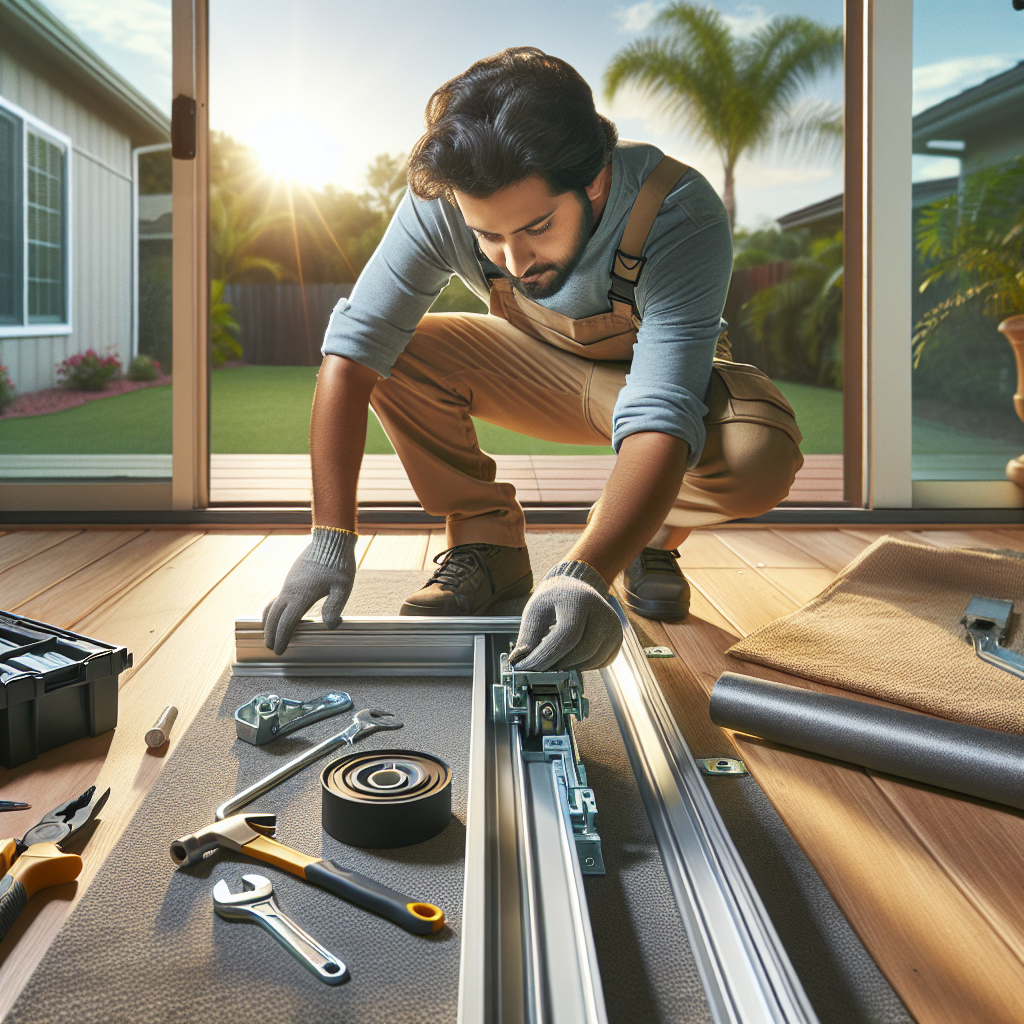
If your sliding patio door drags, sticks, or comes off its track, this patio door runner repair guide tells you what to check, what you can safely fix yourself, and when to call in R C Windows & Doors. You will get three quick diagnostics you can do in 10 to 20 minutes, step-by-step adjustments and roller replacements with the right tools, and realistic parts and labor cost ranges. Advice is tailored to Ocala conditions—humidity and pollen that accelerate wear—so you stop guessing and start fixing.
How sliding patio door runners and rollers work and the most common failure modes
Key point: the sliding sash rides on a small system of rollers and guides, and most mobility problems are mechanical rather than glass related. If you understand which part touches which surface and what wears first, you can diagnose whether the fix is a cleaning and adjustment or a parts swap.
How the parts interact
The basic parts are the bottom track, the bottom rollers, the sash, the top guide, and the adjustment screws in the roller housing. The sash transfers its weight to the rollers, the rollers run along the track, and the top guide stabilizes sideways motion. Small issues in any of those elements turn into large operational problems because the system magnifies misalignment and debris.
| Component | Typical failure modes | Quick DIY check |
|---|---|---|
| Bottom rollers | Worn tread, seized bearings, missing wheels | Lift sash slightly and inspect visible wheel condition |
| Bottom track | Dents, paint build up, corrosion, clogged weep holes | Run a screwdriver blade along track to feel bumps and vacuum debris |
| Adjustment screws | Stripped heads, frozen threads | Try turning gently with correct tool; heavy resistance indicates corrosion |
| Top guide and sash | Worn guide causing sash tilt or rubbing | Push sash side to side to check lateral play |
Practical insight – cleaning is not optional. In Ocala conditions pollen and grit embed in tracks and act like sandpaper. Many homeowners waste time lubricating over contaminated tracks which only traps more abrasive particles. Clean first, then use a dry silicone or PTFE spray sparingly.
- Most common failure: debris and grime causing rollers to bind or wear unevenly
- Next most common: worn or flattened roller wheels that no longer track true
- Serious but less frequent: bent track from impact or long term corrosion that causes skipping and requires track replacement
Tradeoff to accept when choosing replacement rollers – cheaper universal rollers will work for light duty doors but often use smaller bearings and produce more play over time. Upgrading to a quality ball bearing or OEM roller costs more now but typically saves another service call and prevents sash wear that leads to sash replacement.
Concrete example: A homeowner in Marion County complained the sliding patio door squeaked and caught every few inches. Inspection showed a thick ring of pollen cake in the track and one roller wheel missing its nylon tread. After a focused clean, one roller replacement, and a roller height adjustment the door ran smoothly. The fix took 90 minutes and cost under 100 in parts.
If the sash will not lift off the rollers during a lift test or the track shows visible bends, stop DIY attempts and get a professional assessment to avoid dropping the sash or cracking the glass.
When sliding patio door runner repair is unlikely to be enough – repeated roller replacements on the same sash, visible frame distortion, or water intrusion at the threshold usually point to track or sash replacement rather than another parts swap. For an onsite diagnosis schedule a visit at sliding glass door repair.
Frequently Asked Questions
Direct answers you can use now. Below are concise, practical responses to the problems Ocala homeowners run into most when dealing with patio door runner repair — not long theory, but what to check, when a part will fail again, and when to stop.
Common homeowner questions — short, practical replies
How do I tell whether the rollers or the track are the culprit? Lift the sash a few inches while a helper steadies it and watch the roller wheels as you tilt the door slightly. If wheels spin freely but the sash still binds, the track is likely scored or bent. If wheels do not turn, are scalloped, or the sash slips under load after adjustment, the rollers are the weak link.
Can I replace rollers myself? Many homeowners can swap rollers with basic tools and a second person to handle the sash, but expect two practical limits: proprietary roller housings (common on OEM doors) and heavy, tempered-glass sashes. If the roller housing is riveted into the sash or the sash is unusually heavy, call a technician.
What lubricant should I use and when is it a bad idea? Use a dry PTFE or silicone spray only after the track is cleaned. Oily lubricants attract grit and create more abrasive wear over time. That quick spray without cleaning is a frequent false economy.
Are aftermarket rollers a reliable save? Aftermarket kits are fine for low-traffic doors, but cheap rollers commonly use smaller bearings and produce side-to-side play that accelerates sash wear. If the door is used daily or secures an entry, spend on better-quality ball-bearing or OEM rollers to avoid repeat service calls.
How do I buy the right replacement? Photograph the roller assembly (housing, wheel diameter, and the adjustment screw head) and bring the pictures to a parts counter or send them with your inquiry. Measuring the housing width and wheel diameter reduces guesswork; mismatched parts are the most common cause of failed DIY repairs.
Will a quick adjustment fix a door that drags only sometimes? Sometimes. If a roller adjustment raises the sash and the door stays aligned under normal use, that is a real fix. If the adjustment slips after a few cycles or the door still catches at the same spot, the roller tread or track surface has likely been compromised and the adjustment is only temporary.
What should I tell a technician when I request a visit? Describe the exact symptom (dragging, skipping, loud grinding, door will not lock), how long it has occurred, any previous repairs, and include the door brand or photos if available. This lets the technician bring likely replacement parts instead of making a second trip. You can request an onsite estimate through R C Windows & Doors sliding glass door repair.
When is replacement the better choice than repair? Choose replacement when the same sash has had multiple roller swaps, the track has permanent deformation, or water/air infiltration indicates a failing threshold or frame. Continuing to replace rollers on a worn sash is throwing money at a part while the underlying structure degrades.
Real-world example: A homeowner replaced cheap universal rollers after the door started to stick. At first the door moved ok, but within months the sash developed lateral play that wore the sill. That play caused the new rollers to load unevenly, and the homeowner ended up needing a track replacement and a higher-grade roller—more time and cost than buying higher quality parts initially.
Practical trade-off to accept: Buying the cheapest roller kit saves money now and commonly creates a follow-up service call later. If the door is a primary entry or used heavily, invest in better rollers or a professional assessment to avoid accelerated sash and track damage.
Where to look next and useful resources
If you want a visual how-to before trying anything: consult the step photos and guidance at This Old House for safe sash removal and roller replacement sequences. Use their walkthroughs for technique, but follow local-weather cautions for Ocala — post-cleaning lubrication choices matter here.
- Immediate actions: Photograph the roller housing and the track, check whether the roller wheels rotate when you lift the sash, and clear loose debris from the track with a vacuum and brush.
- If comfortable, try: Clean the track thoroughly, then attempt a roller height adjustment. If the adjustment does not hold or you find missing treads, plan for parts replacement.
- When to call us: If the sash will not support itself on the rollers during a lift test, if you see frame distortion, or if cleaning and adjustment fail, schedule an onsite diagnosis at contact R C Windows & Doors so we can bring correct parts and avoid multiple trips.
Inspection and correct part identification are the difference between a one-hour DIY fix and repeated repairs that cost more in time and damage. Take pictures and measure before you buy parts.