

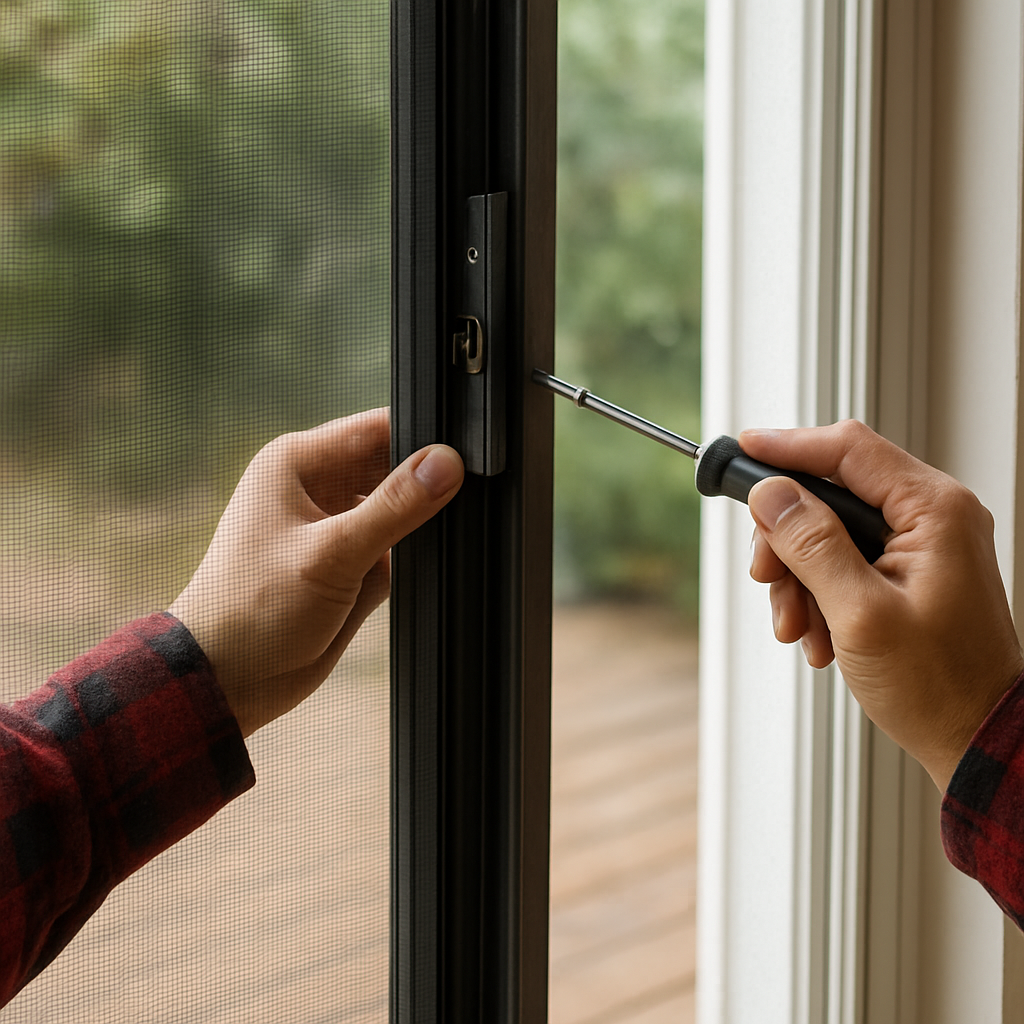
A sliding glass screen door should open and close smoothly, remain securely aligned, and provide reliable protection from insects and outdoor debris. When a patio screen door starts dragging, rattling, sticking, or developing tears, identifying the cause early can help prevent more expensive repairs.
This guide covers common sliding glass door repair problems, including damaged rollers, dirty tracks, torn screen mesh, faulty latches, bent frames, and glass damage. It also explains which repairs may be suitable for DIY maintenance and when professional door or glass service is the safer option.
Quick Diagnostic Checklist for Sliding Glass Screen Door Repair
Before purchasing replacement parts or scheduling a repair, inspect the door carefully. A quick diagnosis can help determine whether the problem is caused by the track, rollers, screen, hardware, frame, or glass.
1. Identify the Problem
Pay attention to exactly how the door behaves. Does it:
- Stick while opening or closing?
- Drag along the bottom track?
- Rattle while moving?
- Tilt to one side?
- Make a grinding or scraping sound?
- Fail to latch properly?
- Have a torn or loose screen?
- Show visible damage to the frame or glass?
Knowing when and where the problem occurs can make it easier to identify the underlying cause.
2. Inspect the Track
Look for dirt, sand, grass, leaves, mud, and other debris in the bottom track. Also check for dents or areas where the aluminum track may have been damaged.
A dirty or damaged track is one of the most common causes of a sliding screen door that does not move properly.
3. Check the Rollers
Worn or damaged rollers can cause the door to drag, tilt, or become difficult to move. Look for chipped wheels, flattened wheels, cracked housings, or rollers that do not rotate smoothly.
If the door sits lower on one side, the roller adjustment may also need attention.
4. Inspect the Screen
Look for:
- Holes or tears
- Loose screen mesh
- Damaged spline
- Mesh pulling away from the frame
- Damage around the corners
Small holes can sometimes be patched, while larger tears or loose mesh usually require screen replacement.
5. Test the Latch and Handle
Operate the latch several times and make sure it engages the strike plate correctly. Loose handles, damaged latches, and misaligned hardware can prevent the door from locking securely.
6. Check for Glass or Frame Damage
If the door includes glass and you see chips, cracks, shattered areas, or signs of structural damage, stop DIY work. Damaged tempered or insulated glass requires professional handling.
7. Take Measurements and Photos
Before ordering replacement parts, measure the door, rollers, spline, and frame openings. Take clear photos of the roller assembly, bottom track, latch, screen frame, and any visible damage.
Accurate measurements can help prevent ordering incompatible parts.
Common Causes of Sliding Glass Screen Door Problems
Understanding the most common causes can help you determine whether a simple adjustment is enough or whether professional sliding glass door repair is necessary.
Dirty or Obstructed Door Tracks
Dirt and debris can accumulate inside the bottom track and interfere with the rollers. Grass, sand, leaves, and outdoor debris can cause the door to hesitate or jump while sliding.
Possible solution: Remove loose debris, vacuum the track, and wipe it clean. Inspect the track afterward for dents or permanent damage.
Worn or Broken Rollers
Rollers support the door and allow it to move along the track. Over time, wheels can become worn, cracked, flattened, or seized.
Common symptoms include:
- A door that drags
- Uneven gaps around the frame
- A door that tilts
- Grinding or scraping sounds
- Difficulty opening or closing
Roller adjustment may solve minor alignment issues, but severely worn rollers should be replaced with the correct replacement parts.
Torn or Sagging Screen Mesh
Screen mesh can become damaged from pets, weather, accidental impact, and normal wear. Torn mesh can allow insects into the home and can make the screen door look worn.
Small punctures may be temporarily patched, but extensive damage generally calls for complete screen mesh replacement.
Broken Latches and Handles
A sliding screen door may stop latching because of a worn handle, broken latch, loose screws, or an improperly aligned strike plate.
Before replacing the hardware, check whether the frame is sitting squarely. A misaligned door can make otherwise functional hardware appear defective.
Bent Frames or Damaged Tracks
A bent frame can cause the door to bind at one corner or prevent it from sitting squarely in the opening.
Minor alignment problems can sometimes be corrected by adjusting the rollers. A severely bent frame or damaged track generally requires professional attention.
Cracked or Damaged Glass
Glass damage is different from routine screen-door maintenance. Chips, cracks, spiderweb-like fractures, or failed insulated glass seals can require professional glass replacement.
Do not attempt to remove or handle damaged tempered glass without the proper equipment and experience.
DIY Sliding Glass Screen Door Repair for Tracks and Rollers
Some sliding screen door problems can be corrected with basic tools when the frame is straight and the glass is undamaged.
Tools and Supplies
Depending on the repair, you may need:
- Phillips and flat-head screwdrivers
- 1/4-inch and 5/16-inch sockets
- Tape measure
- Level
- Vacuum or shop vacuum
- Plastic putty knife
- Mild detergent
- Silicone spray lubricant
- Replacement rollers
- Replacement roller housing
- Work gloves
- Safety glasses
Always verify the replacement roller size and mounting style before purchasing parts.
Step 1: Remove and Support the Door
If the screen panel can be safely removed, lift the panel upward and angle the bottom outward to release it from the track.
Larger or heavier doors may require two people. Never force a door that will not lift out normally.
Step 2: Inspect the Rollers
Check each wheel for cracks, flat spots, excessive wear, or restricted movement.
Rotate the rollers by hand and make sure they move smoothly.
Step 3: Clean the Track
Vacuum loose dirt and debris from the track. Use a plastic putty knife to remove compacted buildup, then wipe the track with mild detergent and water.
Avoid sanding or grinding the aluminum track because changing the shape of the track can create additional alignment problems.
Step 4: Adjust the Rollers
Most adjustable rollers have a screw located near the bottom edge of the door.
Turning the adjustment screw can raise or lower the door. Make small adjustments and test the door after each change.
The goal is to keep the door level while maintaining proper clearance from the frame.
Step 5: Replace Damaged Rollers
If the wheels are worn or broken, remove the roller housing and install a matching replacement.
Do not assume that all sliding door rollers are interchangeable. Match the wheel diameter, housing style, mounting configuration, and other relevant dimensions.
Step 6: Reinstall and Test the Door
Once the rollers have been adjusted or replaced, reinstall the door and test its entire travel path.
Make sure the door:
- Slides smoothly
- Does not drag
- Remains level
- Clears the frame
- Latches correctly
Use only a light amount of appropriate lubricant where recommended, and avoid excessive lubricant that can attract dirt.
How to Replace Sliding Screen Door Mesh and Spline
Replacing damaged screen mesh is another common sliding glass screen door repair that can often be completed as a DIY project when the frame is still square and structurally sound.
Materials and Tools
You may need:
- Replacement fiberglass screen mesh
- Pet-resistant screen mesh for high-traffic areas
- Replacement spline
- Spline roller
- Utility knife
- Flat screwdriver
- Measuring tape
The spline size must match the groove in the screen frame.
Step-by-Step Screen Replacement
- Remove the screen frame. Carefully remove the screen insert or loosen the appropriate frame components.
- Remove the old spline. Use a screwdriver or spline-removal tool to lift the existing spline from the channel.
- Remove the damaged mesh. Cut away the old screen and clean the frame.
- Position the new mesh. Lay the replacement mesh over the frame with extra material extending beyond each edge.
- Install the spline. Use a spline roller to press the spline into the groove while maintaining even tension.
- Trim the excess mesh. Carefully cut away the excess material with a utility knife.
- Reinstall the screen. Place the finished screen back into the door and check that the mesh is evenly tensioned.
Do not overstretch the screen. Excessive tension can distort the frame or create ripples in the finished mesh.
Screen Patch vs. Complete Screen Replacement
A small puncture in the middle of the screen may be suitable for a temporary patch. This can be useful for low-traffic areas where appearance and long-term durability are not major concerns.
Complete screen replacement is generally more appropriate when:
- The tear is large
- The screen is damaged around the edges
- The spline is loose
- Multiple areas are torn
- Pets have damaged the mesh
- The screen has become brittle
- The mesh is sagging
A properly installed replacement screen provides a cleaner appearance and longer-lasting solution than repeatedly patching extensive damage.
Sliding Screen Door Latch, Handle, and Weatherstripping Repairs
A faulty latch or handle can make a properly functioning door difficult to secure.
Before purchasing replacement hardware, measure the existing components and take photographs of the handle, latch, and strike plate.
Check:
- Screw-hole spacing
- Latch style
- Handle orientation
- Strike plate position
- Frame thickness
- Hardware mounting style
Some surface-mounted latches are relatively simple to replace. More specialized or mortise-style hardware can require additional work.
Weatherstripping
Worn weatherstripping can cause rattling, drafts, and gaps around the door.
Replace weatherstripping when it becomes:
- Brittle
- Cracked
- Compressed
- Loose
- Damaged by weather
If the door remains misaligned after adjusting the hardware, the problem may be related to the frame rather than the latch itself.
When Sliding Glass Screen Door Repair Requires a Professional
DIY maintenance is not appropriate for every sliding door problem. Professional service is recommended when the repair involves structural damage, damaged glass, specialized hardware, or a door that cannot be safely removed.
Contact a professional when you encounter:
Cracked or Shattered Glass
Damaged tempered glass can break unexpectedly. Professional technicians have the equipment and procedures needed to remove and replace damaged glass safely.
Severely Bent Frames
A severely distorted aluminum frame may require specialized equipment to restore its alignment.
Replacing rollers without correcting the frame can result in repeated problems.
Failed Insulated Glass
Condensation between glass panes can indicate a failed insulated glass seal. In these situations, replacing the affected glass unit may be more appropriate than attempting a surface repair.
Proprietary or Hard-to-Find Hardware
Some sliding doors use manufacturer-specific rollers, latches, handles, or other components. If standard replacement parts do not fit, professional identification and sourcing may be necessary.
Repeated Repair Problems
If a door continues to fail after replacing rollers or cleaning the track, look for an underlying cause such as frame distortion, track damage, corrosion, or incorrect parts.
Continuing to replace individual components without identifying the root problem can increase the overall repair cost.
Sliding Glass Door Repair Costs and Timelines in Ocala
The cost of sliding glass screen door repair in Ocala depends on the type of repair, parts required, door condition, and whether custom glass or specialized components are necessary.
| Repair Type | Typical Cost Range | Typical Timeline | DIY Possible? |
|---|---|---|---|
| Roller replacement | $80–$300 per door | Same day to 2 days | Often |
| Screen mesh replacement | $120–$400 | Same day to 2 days | Often |
| Latch or handle replacement | $60–$200 | Same day | Often |
| Tempered glass or insulated glass replacement | $350–$1,200 | 1–7 business days | No |
| Full sliding door replacement | Several hundred to several thousand dollars | 1–4 weeks | No |
These figures are general estimates rather than guaranteed service prices. Actual costs can vary depending on door size, material, damage, replacement-part availability, glass specifications, and labor requirements.
A simple roller adjustment may take considerably less time than replacing a damaged glass panel or correcting a bent frame.
Questions to Ask a Sliding Door Repair Contractor
Before hiring a contractor for sliding glass door repair, ask for details about the work and expected costs.
Licensing and Insurance
Ask whether the contractor is appropriately licensed and insured for the type of work being performed.
Written Estimates
Request an itemized estimate that separates parts, labor, and any additional service charges.
Replacement Parts
Ask what type and brand of rollers, latches, screen mesh, or other components will be installed when the specific part matters.
Repair Timeline
Ask how long the repair is expected to take and whether special-order parts or custom glass could extend the timeline.
Warranty
Find out whether the parts and labor are covered by a warranty and how long the coverage lasts.
Glass Disposal
For glass replacement, ask whether safe removal and disposal of the damaged glass are included.
Additional Charges
Confirm whether there are additional fees for emergency service, after-hours visits, special-order parts, or additional repairs discovered during the inspection.
Preventive Maintenance for Sliding Glass Screen Doors
Regular maintenance can reduce the likelihood of major sliding door problems.
Monthly Maintenance
Spend a few minutes checking:
- Screen mesh for tears
- Spline for looseness
- Weatherstripping for wear
- Bottom tracks for dirt and debris
- Door movement for new sticking or rattling
- Visible corrosion or damage
Quarterly Maintenance
Every few months, inspect:
- Roller condition
- Track alignment
- Door level
- Frame corners
- Weatherstripping
- Latches and handles
- Screws and fasteners
Early adjustments can prevent minor alignment problems from becoming more expensive repairs.
Seasonal Maintenance in Ocala
Ocala’s humid weather and periods of heavy rain can increase exposure to moisture, dirt, and outdoor debris.
Before periods of severe weather:
- Clean the bottom track.
- Make sure the door closes and locks properly.
- Secure loose screens.
- Check the frame and bottom rail for corrosion or damage.
- Remove objects from the patio that could strike the door.
After a storm, inspect the door for sand, mud, silt, impact damage, and changes in roller movement.
If the frame is bent or the glass is cracked, avoid attempting a repair until the damage can be evaluated safely.
Tools and Parts for DIY Sliding Glass Screen Door Repair
Having the correct tools and replacement components can make basic repairs easier.
Essential Tools
- Phillips screwdriver
- Flat-head screwdriver
- Socket or nut-driver set
- Adjustable wrench
- Utility knife
- Tape measure
- Small level
- Plastic putty knife
- Vacuum
- Microfiber cloths
Screen Repair Tools
- Spline roller
- Spline hook or removal tool
- Replacement spline
- Screen mesh
- Utility knife
- Clamps for holding the frame square
Common Replacement Parts
Depending on the door, homeowners may need:
- Replacement rollers
- Roller housings
- Sliding door latches
- Handles and pulls
- Screen spline
- Fiberglass screen mesh
- Pet-resistant screen mesh
- Weatherstripping
- Replacement screws and washers
Safety Equipment
For general maintenance, consider using:
- Safety glasses
- Work gloves
- Cut-resistant gloves when appropriate
- Knee protection
Specialized glass-handling equipment should be left to trained professionals.
How to Match Replacement Parts
One of the most important steps in DIY sliding glass screen door repair is identifying the correct replacement part.
Before ordering a roller, measure:
- Wheel diameter
- Wheel width
- Housing dimensions
- Mounting-hole spacing
- Axle configuration
- Overall roller assembly dimensions
For screen replacement, measure the frame groove and select the correct spline diameter.
Do not assume that two parts are compatible simply because they look similar. Installing the wrong roller or spline can create additional alignment problems and cause premature wear.
If you cannot identify the correct part confidently, take detailed photographs and measurements or have a professional inspect the door.
Final Thoughts on Sliding Glass Screen Door Repair
Many common sliding screen door problems can be addressed with basic maintenance. Cleaning the track, adjusting rollers, replacing worn wheels, repairing screen mesh, and changing standard hardware are often manageable when the door frame is straight and undamaged.
However, sliding glass screen door repair should be handled professionally when the job involves cracked glass, severe frame damage, failed insulated glass, specialized hardware, or recurring mechanical problems.
The best place to start is always with a careful inspection. Identify the source of the problem before purchasing replacement parts, and avoid forcing a repair when the damage involves the glass or structural components.
For homeowners in Ocala, regular track cleaning, roller inspections, screen maintenance, and weatherstripping replacement can help extend the life of a sliding glass screen door and reduce unexpected repair problems.