

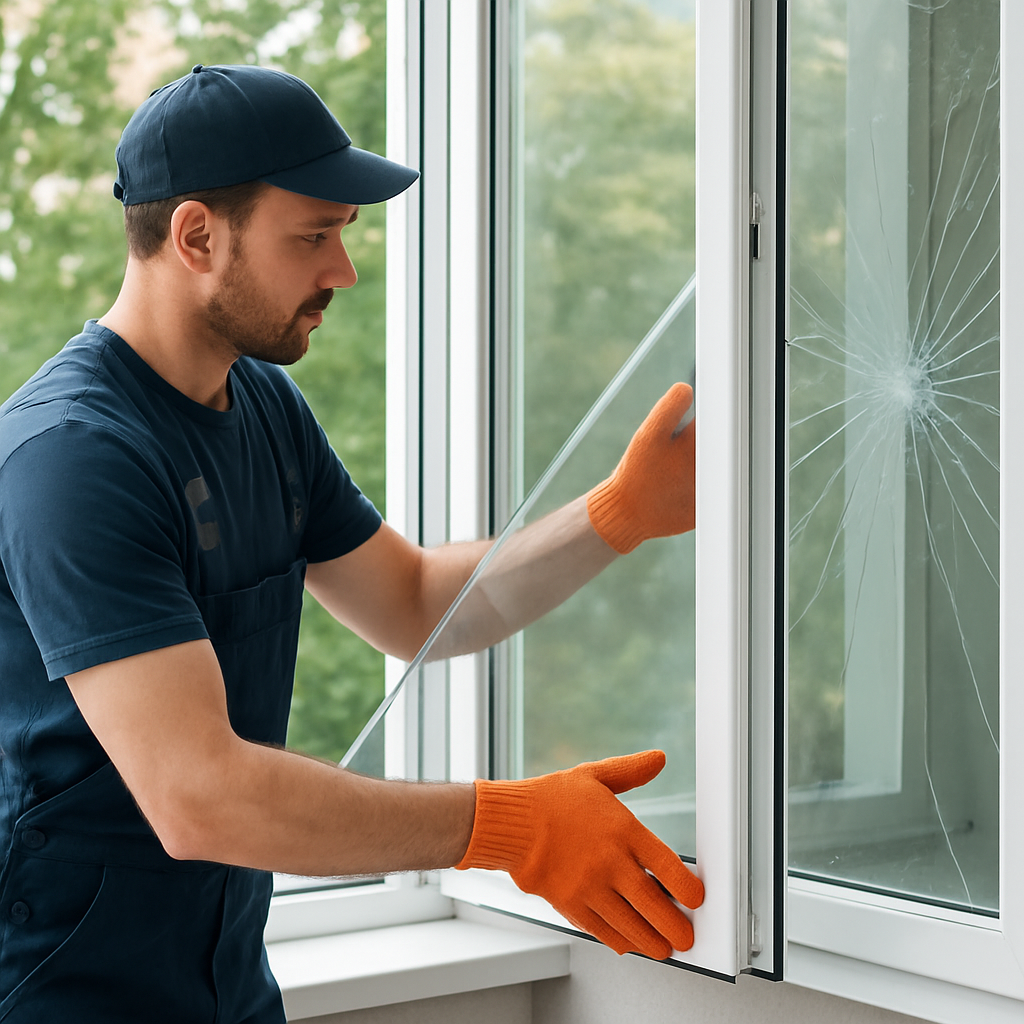
If you have a cracked, fogged, or broken pane, understanding glass replacement will save you time and money. This guide walks through the common glass types, realistic cost ranges for Ocala and Marion County, and the professional step-by-step process for replacing window and door glass so you can tell when repair is enough and when a full replacement is necessary. Youll also get a practical pricing checklist and the key questions to ask before hiring a local contractor.
Why timely glass replacement matters for safety, energy, and home value
Immediate safety risks: A cracked or shattered door or window is not just cosmetic. Broken glazing creates an easy entry point for intruders, sharp edges that cause injury, and can prevent locks and latches from seating correctly. For exterior doors and sidelights, building code or insurance may require tempered or impact-rated glass; leaving a compromised panel in place can void coverages and fail inspections.
Energy and moisture consequences: Failed insulated glass units let humid Florida air into the frame cavity and reduce thermal performance. That shows up as fogging between panes, higher cooling loads, and trapped moisture that accelerates wood rot, swelling, and corrosion of hardware. Replacing an IGU restores thermal function; delaying often turns a glass-only job into a full frame replacement.
Practical tradeoffs and what to act on first
- Act fast for entry and patio doors: Prioritize replacement or emergency glass repair to secure the home and meet code for safety glazing.
- Treat fogged IGUs as a medium-term urgency: Not a broken-glass emergency, but replacement within weeks to months prevents secondary damage and rising cooling costs.
- Weigh glass-only versus full unit replacement: If the sash and frame are sound, glass-only is cheaper; if frames are warped, rotted, or leaking, plan for full window or door replacement to avoid rework.
Concrete example: A Marion County homeowner left a cracked sliding door panel after a storm for three months. Moisture seeped into the sill, the track rusted, and the sash warped. What began as an estimated tempered panel replacement of a few hundred dollars escalated to a full door replacement and flashing repair costing several times more.
Judgment you can use: If a damaged opening affects security, egress, or required safety glazing locations, treat it as high priority and get a professional assessment immediately. If the problem is fogging without frame damage, schedule IGU replacement promptly rather than postponing indefinitely; cheap short-term fixes rarely save money long term.
Key takeaway: Safety-first for broken or door glazing; schedule IGU work before moisture and heat turn a small repair into a full unit replacement.
Types of residential window and door glass and when to choose each
Selection matters more than price alone. The right glass solves a problem — security, code compliance, thermal control, or aesthetics — and choosing the wrong type is a common, costly mistake for homeowners.
Standard and energy-focused glazing
Insulated glass units (IGUs) vs single-pane: IGUs (double or triple pane) are the default upgrade for energy performance and humidity control. In central Florida you want an IGU specified for low solar heat gain, not a winter-heating specification. Low-e coatings and argon fill reduce heat transfer but add cost and lead time — they also change visible light and tint slightly, which matters for matching adjacent windows.
Safety and security glass
Tempered and laminated serve different risks. Tempered glass is the code-required choice where breakage would create large hazards — doors, sidelights, shower enclosures. It shatters into small fragments and is inexpensive compared with laminated glass. Laminated glass holds together after impact, provides intrusion resistance and better sound control, but costs more and is heavier. A practical rule: pick tempered where code forces it; choose laminated where security, noise, or hurricane resistance is the priority.
Impact-rated and code-driven glazing
When code or insurance requires impact glazing, you are not buying a nicer pane — you are buying a system. Impact-rated assemblies include laminated or multi-laminate IGUs with specific frames and anchors. In many coastal or high-velocity hurricane zones, insurance credits make the higher upfront cost sensible. Outside mandated zones, impact glass still pays when you factor avoided water intrusion and fewer replacements after storms.
- Choose single-pane for interior or non-conditioned spaces where cost is the only factor and efficiency is irrelevant.
- Choose an IGU with low-e for living spaces exposed to sun where cooling load and condensation are problems.
- Choose tempered for exterior doors, bathrooms, and large sliding doors when code or safety is the trigger.
- Choose laminated or impact-rated for ground-floor glazing, entry sidelites, or when insurance/code require it.
- Choose specialty glass (frosted, patterned, tinted) when privacy or style outweighs marginal cost increases.
Concrete example: A homeowner with a cracked patio door in Ocala ordered a tempered replacement because code and egress rules applied; the sliding door glass arrived tempered in two weeks and was installed the same day. Another homeowner with a sunny west-facing bedroom replaced a cloudy sealed unit with an IGU specified for low solar heat gain and noticed a measurable drop in afternoon surface temperature and HVAC cycling.
Practical trade-off: Tempered glass is cheap and easy to source but cannot be cut or modified after tempering; laminated and impact-rated options are more costly and heavier but reduce rework and repeated claims after storms. If you plan to keep a home through multiple hurricane seasons, accept the higher initial cost for fewer problems later.
Next consideration: Before requesting a glass replacement quote, verify whether the opening must meet impact or tempered requirements and whether the frame is sound; that determines whether you need a glass-only quote or a full unit replacement estimate.
How professionals evaluate whether to replace glass only or the entire window or door
Immediate decision drivers: technicians use a short list of measurable conditions to choose glass-only work or full unit replacement — frame integrity, sash alignment, seal performance, safety-glazing requirements, and whether the glass can be sourced or modified to fit the existing opening. These are not opinions; they are thresholds that determine whether a repair will last or create follow-up work.
On-site decision flow
- Verify frame stability: poke and tap the jamb and sill for soft wood, and check for visible rot or separation. If the frame has structural compromise, professionals favor full replacement because a new IGU in a failing frame fails quickly.
- Check sash squareness and operation: if a sash drags, binds, or diagonal measurements differ beyond roughly 1/8 inch, glazing-only work often fails to restore function and a full sash or unit swap is recommended.
- Confirm glass type constraints: tempered glass cannot be cut or reworked; if the opening needs a nonstandard size or muntin match that requires field cutting, a full sash or unit change may be the only option.
- Assess seal failure vs mechanical damage: fogged or misted IGUs usually point to a failed seal — a direct IGU replacement is appropriate when frames are sound. Impact or shattered glass with frame distortion usually pushes the decision toward complete replacement.
- Apply code and insurance triggers: locations that require safety glazing or impact-rated systems force different solutions. Professionals check local code and insurance paperwork before finalizing scope.
Practical trade-off to expect: choosing glass-only is cheaper up front but only works when the surrounding components are in good shape. If you accept a glass-only quote to save money now and the frame or hardware is marginal, you risk a return visit, warranty disputes, and higher cumulative cost.
Concrete example: A homeowner with a fogged IGU in a double-hung window had no rot and smooth operation; the crew replaced the IGU, resealed the sash, and restored thermal performance in a single visit. Conversely, a broken sliding patio panel revealed a bent track and recessed sill damage; replacing just the glass would have left the door misaligned and vulnerable, so the contractor recommended a full door assembly replacement.
If the problem affects safety, egress, or requires certified impact/tempered glazing, treat the job as a system replacement until proven otherwise.
Before you sign a glass-only estimate: ask the contractor if their quote assumes the existing frame and hardware are fully reused, whether they verify square and operation before ordering glass, and whether their workmanship warranty covers premature seal or leak failures. For Ocala customers you can request a photo condition report and an itemized scope to avoid surprises.
Next consideration: get an on-site assessment that documents frame condition and operation in writing. That single page of notes prevents common misunderstandings and makes the glass replacement or full unit quote comparable and defensible.
Realistic cost ranges and what drives price in Ocala
Straight talk: glass replacement prices in Ocala run from a few dozen dollars for a simple interior single pane to several thousand for impact-rated storefront or full-unit replacements. What matters more than a ballpark is which cost drivers apply to your opening — size, glass type, safety or impact requirements, and whether the existing frame is reusable.
- Major cost drivers: size (bigger = non-linear cost), safety/impact requirements (tempered or laminated), custom glass shapes or obscure finishes, and factory lead time for tempered/laminated units.
- Soft costs that add up: travel time to rural addresses, emergency same-day service, permit fees for certain commercial or exterior replacements, and disposal of hazardous broken glass.
- Match and finish costs: matching grids, color-coated frames, or low-e coatings add both material cost and ordering complexity — expect longer lead times and higher price for visual matches.
Concrete example: An Ocala homeowner with a fogged double-hung IGU had a contractor replace only the IGU; cost landed near the middle of the IGU range and the unit arrived in five business days. Contrast that with a sliding glass door shattered during a storm: the replacement required a tempered panel, track repairs, and a new sill — the total jumped into the full-door replacement band with a two-week lead time because the frame needed alignment.
Judgment you can use: if a quote looks too low, insist on a line-by-line breakdown. Pay more to avoid weak edge seals, improper glazing beads, or omitted hardware work. For openings that affect security or code compliance, accept that materials and labor will be at the mid-to-high end of the range — cheap is false economy.
Estimate checklist: ask for itemized costs for glass, labor, sealants/gaskets, disposal, travel/emergency fees, warranty length (materials vs workmanship), and expected lead time.
Next consideration: get an on-site measurement before accepting a fixed-price online quote. That single visit exposes frame issues, code triggers, and match requirements that change both price and timeline more than most homeowners expect.
Step by step: how professionals replace window and door glass
Start with the condition, not the glass. Professionals make the replace-or-repair decision by testing the frame, sash, and hardware first; the glass itself is only one component of a weatherproof, secure opening. A measured, documented workflow prevents the common failure modes that drive repeat visits.
Standard professional workflow
- Site assessment and documentation: Record photos, measure visible distortions, check for rot or corrosion, and note safety or impact triggers. Contractors should save this report with the order so the glass vendor sees the same scope you do.
- Safe removal: Remove stops or trim, extract sash or panel, and place broken glass into approved containers. Protect interior finishes with drop cloths and secure the opening with temporary boarding if needed for safety.
- Precision measurement and specification: Measure at multiple points; professionals write the finished glass size and tolerances, then specify coatings, spacer type, tempering, or lamination. Tempered glass cannot be cut later so getting specs right is non negotiable.
- Ordering and lead time planning: Order to the documented spec. Expect short lead times for plain panes, longer for tempered, laminated, or impact-rated IGUs. Schedule install windows that account for manufacturer production and shipping variability.
- Fit and set: Install uses glazing blocks, shims, and correct sealants – butyl or structural silicone where required – and new gaskets or setting beads. Proper compression and block placement prevent seal creep and fogging later.
- Sealing and flashing details: For exterior doors and replacement sills, professionals apply flashing and thru-fastener sealing to maintain weather resistance. In Florida, skip cosmetic sealant-only fixes on sill areas; water intrusion follows quickly in humid climates.
- Clean up, testing, and paperwork: Final checks include operation, water or pressure testing when appropriate, sticker or certification for tempered/impact glass, and written warranty delivered to the customer.
Practical trade-off: Ordering tempered or laminated panels raises cost and lead time but reduces callbacks. If speed is the top priority, expect compromises in selection or performance. In practice, insist on the correct glass type up front even when it delays completion by days; fixing a wrong panel later costs far more.
Concrete example: A fogged IGU in a double-hung window was measured on site, documented, and ordered as a low-e IGU with argon. The unit arrived in five business days and the crew replaced the sash glass, reset the glazing blocks, and resealed the exterior in 90 minutes. By contrast, a shattered sliding patio panel required a tempered replacement, track alignment, and a two week lead time because the panel had to be factory tempered to size.
Judgment to apply: Do not accept a contractor ordering glass to nominal sizes without verifying sash square and operation first. Shops that do this save time initially but pass the risk of misfit or premature seal failure to you. Require a written scope that states whether the frame will be reused and which sealant and spacer types are included.
If code, safety glazing, or insurance requirements apply, treat the job as a system replacement until proven otherwise.
Key step to insist on: get an on-site measurement and a photo-backed condition report before the contractor orders glass.
Common job scenarios and example timelines
Most glass replacement jobs land in one of three timing categories: immediate safety fixes, quick-turn glass-only swaps, and multi-stage replacements that require framing, flashing, or permits. Each category has different scheduling needs and cost tradeoffs you must accept up front.
Scenario snapshots and realistic timing
- Emergency breakage (doors, ground-floor windows): secure the opening same day with a board or temporary glazing, document for insurance, and order the correct safety or impact glass. Expect the job to be handled in two parts: immediate protection, then a scheduled repair that depends on whether tempered, laminated, or impact-rated glass is required.
- Fogged IGU or cracked single pane in a functioning window: these are usually scheduled as a single visit for measurement and a follow-up install when the replacement unit arrives. Lead time depends on whether you specify low-e/argon or standard glass and on vendor backlog; faster options cost more but reduce the risk of moisture damage while you wait.
- Shattered sliding door or oversized tempered panel: these often become multi-trade jobs because track, sill, or frame damage appears once the glass is removed. Plan for a measured order plus follow-up adjustments; expect coordination between glass, carpentry, and sometimes a structural fastener or flashing subcontractor.
- Full unit or impact upgrade (storm compliance or heavy damage): these are scheduled work windows. The process includes removal, new unit delivery, flashing and tie-in, and final inspection. Permits or insurance coordination can extend the timeline beyond the physical install days.
Practical trade-off: choosing the fastest available glass option often means accepting a standard size or finish rather than a match. If matching muntins, low-e tint, or an exact spacer color matters, expect longer lead time and higher cost — but a better long-term result and fewer callbacks.
Real job example: A homeowner in Ocala woke to a cracked skylight after a hail storm. The crew boarded the opening the same afternoon, measured the skylight, ordered a custom insulated unit with a UV-rated coating, and returned once the factory unit arrived to reinstall and reflash the curb. Because the skylight required custom curbing details, the full repair spanned two scheduled visits and careful weather planning.
Common delay drivers to watch for: insurance approvals, factory tempering or lamination queues, color/muntin matching requests, and bad weather for exterior flashing work. Ask contractors for a documented window of availability and what will trigger a revised date so you can plan security and living arrangements.
If security or egress is involved, insist on a same-day temporary protection and a written timeline for permanent replacement; temporary fixes are not a substitute for the correct safety-rated glass.
Key action: When you call for an estimate, request a photo-backed condition report, the expected production lead time for the specified glass type, and whether the quote includes any follow-up carpentry or flashing.
Next consideration: if timing is a top concern, prioritize contractors who provide clear interim protection plans, documented lead times for the exact glass specified, and a warranty that covers the staged nature of the work.
How R C Windows & Doors performs glass replacement for Ocala customers
Clear approach up front: R C Windows & Doors treats each job as a site-specific building-repair task, not a generic glass swap. Technicians document the opening, confirm which regulatory or insurance constraints apply, and set a scope that separates temporary protection from permanent replacement so customers know the tradeoffs before work begins.
Onsite assessment and scope setting
What we inspect: the crew checks frame plumb, sill condition, sash operation, remaining gasket health, and whether the opening falls under local code or insurer conditions for tempered or impact-rated glazing. Measurements are taken at multiple points and photographed so the glass vendor and homeowner see the same documented condition.
- Documentation: photo-backed condition report and written scope with reuse assumptions for the frame and hardware
- Immediate protection: same-day boarding or temporary glazing when security or weather exposure is present
- Specification: exact finished glass size, spacer and edge-seal type, low-e or coating choices, and whether tempering or lamination is required
Practical tradeoff to understand: emergency same-day service secures the property but often means a separate permanent visit when the correctly tempered or impact panel arrives. R C Windows & Doors will perform the staged approach, but homeowners should expect the cost and schedule to reflect two distinct activities – emergency protection and the factory-produced replacement.
Ordering and installation practice: the company sources through local and regional fabricators for speed, confirms Miami-Dade or Florida Building Commission requirements when needed, and refuses to field-cut tempered glass. Installation uses glazing blocks, new gaskets or structural sealants as specified, and a final flash or sill detail to reduce recurrence of water intrusion in Ocala humidity.
Concrete example: A homeowner called after a storm shattered a patio panel. The crew boarded the opening that afternoon, measured the opening and noted a slightly warped track. R C ordered a tempered replacement sized to fit after track alignment, returned two weeks later to install the panel, adjusted the track, recaulked the exterior, and left a photo record plus a workmanship warranty.
Judgment customers should use: insist on a written condition report and an itemized estimate that differentiates glass, labor, temporary protection, and any carpentry or flashing work. Low bids that omit those line items usually result in callbacks; paying a sensible premium for proper seals and documented measurements prevents repeat service in humid Florida conditions.
What you will receive with an R C estimate: a photo-backed condition report, itemized costs for glass and labor, expected factory lead time, whether the frame will be reused, and a clear workmanship warranty period.