

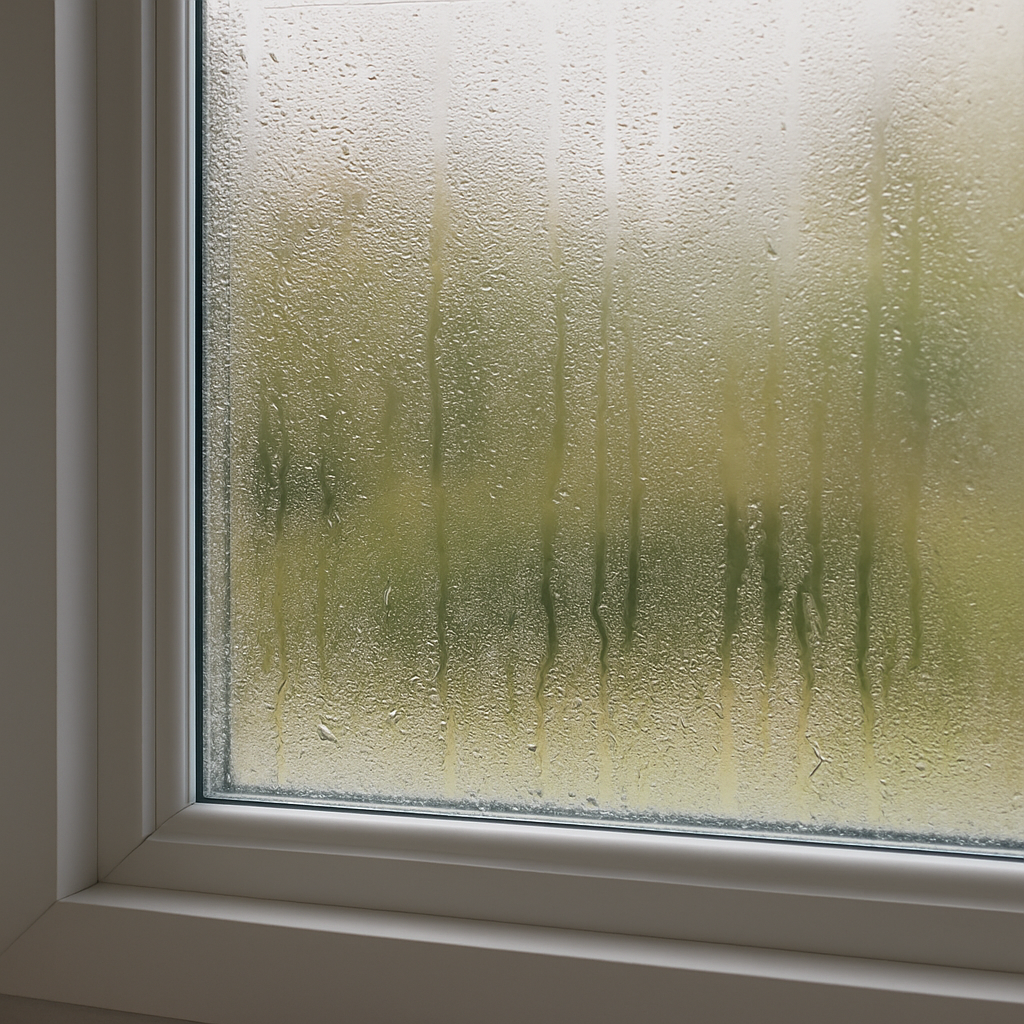
Have you noticed condensation between window panes, cloudy glass, or foggy windows that never seem to clear up? If wiping the inside and outside of the glass does not remove the haze, the problem may be more than ordinary window condensation. It could indicate a failed seal inside your double-pane windows.
Moisture trapped between glass panes is a common sign that an insulated window unit is no longer performing as designed. Besides affecting your view, failed seals can reduce glass insulation, contribute to energy loss, and create other window performance issues.
Understanding the causes of condensation and knowing when to consider window repair or window replacement can help you protect your home’s comfort and energy efficiency.
What Does Condensation Between Window Panes Mean?
Normal window condensation usually appears on the surface of the glass. It can happen when warm, humid indoor air comes into contact with a cooler window surface. This type of interior moisture can often be addressed by improving ventilation, reducing indoor humidity, or adjusting your thermostat.
However, moisture between panes is different.
If you can see fog, droplets, streaks, or persistent cloudiness inside the space separating two panes of glass, the sealed unit has likely developed a problem. Modern double pane windows are constructed with two pieces of glass separated by a spacer and sealed around the perimeter. Together, these components form an insulated glass unit, commonly called an IGU.
The sealed space is designed to improve thermal performance by slowing heat transfer. When the window seals fail, outside air and moisture can enter the space between the panes. The result is the familiar appearance of window fogging or permanently foggy windows.
R C Windows & Doors identifies failed seals and foggy insulated glass as common glass problems and can often replace the affected insulated glass unit without replacing the entire window frame.
Common Condensation Causes
Not all condensation indicates a failed window. Identifying where the moisture is located is the first step toward finding the right solution.
1. Condensation on the Interior Surface
If moisture is on the room-facing side of the glass, the issue may be related to humidity problems inside the home.
Common causes include:
- High indoor humidity
- Poor ventilation
- Cooking and showering
- Drying clothes indoors
- Insufficient air circulation
- Large temperature differences between rooms and windows
In these situations, the window itself may not be defective. Improving ventilation and using appropriate moisture control solutions can reduce condensation.
2. Condensation on the Exterior Surface
Exterior condensation can actually occur on well-insulated windows. When the outside glass becomes cooler than the surrounding air, moisture may form on the exterior surface.
This does not necessarily indicate a window problem. In some cases, it can be a sign that your windows are effectively limiting heat transfer from inside the home.
3. Moisture Between the Panes
When condensation appears between two panes and cannot be wiped away from either side, a failed seal is the most likely explanation.
This is one of the most important window performance issues to recognize because the sealed insulating space has been compromised.
Why Failed Window Seals Matter
The seal around an insulated glass unit does more than keep moisture out. It helps maintain the insulating properties of the window.
When window seals fail, moisture can enter the space between the panes. Depending on the construction of the unit, the insulating gas and desiccant system may also no longer perform as intended.
Over time, this can affect:
- Thermal performance
- Glass insulation
- Visibility through the window
- Indoor comfort
- Energy efficiency windows
- Protection against outdoor conditions
A failed seal does not necessarily mean the entire window must be replaced. If the frame, sash, hardware, and surrounding structure remain in good condition, replacing the failed insulated glass unit may be enough. R C Windows & Doors notes that glass-only replacement can often preserve a sound existing frame while restoring appearance and insulating performance.
Can You Fix Condensation Between Panes?
Unfortunately, moisture trapped inside an insulated glass unit generally cannot be fixed by simply cleaning the glass.
Cleaning the inside surface of the window will not remove moisture that is trapped inside the sealed cavity.
Homeowners may find products advertised as condensation repair kits, drilling solutions, or defogging services. These approaches may temporarily improve visibility in some circumstances, but they do not necessarily restore the original sealed construction or long-term thermal performance of the IGU.
For a lasting solution, professional assessment is usually the better approach.
Depending on the condition of the window, possible condensation solutions include:
- Replacing the insulated glass unit.
- Replacing damaged or deteriorated components around the glass.
- Repairing surrounding seals where appropriate.
- Replacing the complete window if the frame or sash is also compromised.
R C Windows & Doors specifically replaces foggy insulated glass units and explains that the affected panel can often be replaced rather than removing the entire window.
When Is Window Repair Enough?
Window repair may be the most practical option when the existing frame is structurally sound and the primary problem is the glass or another replaceable component.
For example, a window may have:
- Fogging between panes
- A failed insulated glass seal
- Damaged glass
- Worn window hardware
- Broken balances
- Problems with locks or latches
- Track or operating problems
In these situations, replacing only the defective component can be more economical than full window replacement.
R C Windows & Doors takes a repair-first approach when possible, avoiding unnecessary replacement of parts that are still functional.
When Should You Consider Window Replacement?
Sometimes the glass is only part of the problem.
Full window replacement may make more sense when you also notice:
- Rotten or severely deteriorated frames
- Persistent air leaks
- Significant drafts
- Damaged sashes
- Poor operation
- Repeated insulated glass failures
- Serious deterioration around the opening
- Windows that no longer provide the desired energy efficiency
- Major home insulation and comfort concerns
If several components are failing at the same time, replacing individual parts may only postpone a larger project.
A professional inspection can help determine whether you need glass replacement, targeted window repair, or a complete new window.
Condensation, Drafty Windows, and Energy Loss
Condensation is not the only sign that your windows may have performance problems.
Drafty windows can allow conditioned air to escape while letting outdoor air enter. These air leaks can make rooms feel uncomfortable and increase the workload on your heating or cooling system.
Combined with inadequate home insulation, deteriorating seals, or older window designs, these problems can contribute to higher energy use.
Modern energy efficiency windows can provide improved insulation and help reduce unwanted heat transfer. However, upgrading every window is not always necessary. If your existing frames are in good condition, replacing failed insulated glass may provide a more targeted approach to improving window performance.
How to Prevent Future Condensation Problems
While you cannot prevent every seal failure, regular window maintenance can help you identify problems before they become more serious.
Consider these steps:
Monitor indoor humidity
Keep indoor humidity at a reasonable level and use ventilation in bathrooms and kitchens. Address persistent humidity problems promptly.
Inspect your windows regularly
Look for cracks, deteriorating sealant, damaged weatherstripping, gaps, and signs of moisture around the frame.
Check for drafts
On a suitable day, inspect your windows for noticeable air movement around the frame and sash. Drafts can indicate deteriorated seals or other weatherproofing windows problems.
Keep window tracks and drainage paths clean
Dirt and debris can interfere with window operation and drainage.
Address fogging early
If moisture appears between panes, do not assume it is simply a cleaning problem. Early evaluation can help you determine whether glass replacement or another repair is appropriate.
Use window treatments appropriately
Curtains, blinds, and other window treatments can affect airflow around the glass. Avoid completely blocking circulation around windows when indoor humidity is already high.
Do You Need Condensation Repair or Window Replacement?
The easiest way to determine the right solution is to identify where the moisture is located.
Moisture on the room side:
Usually related to indoor humidity, temperature, or ventilation.
Moisture on the exterior side:
Can occur normally, particularly with highly insulated windows.
Moisture between panes:
Usually indicates a failed insulated glass seal and may require replacement of the IGU.
Condensation plus drafts, damaged frames, or operating problems:
A more comprehensive window inspection may be appropriate.
The goal is not automatically to replace the entire window. The goal is to identify the actual problem and select the most practical repair.
Get Help With Foggy Windows in Ocala
Persistent window condensation, window fogging, and moisture between panes should not be ignored. Failed insulated glass can affect visibility, appearance, insulation, and overall window performance.
The good news is that a foggy double-pane window does not automatically mean you need a completely new window. When the existing frame is in good condition, replacing the failed insulated glass unit may restore clarity and insulation without replacing the entire assembly.
R C Windows & Doors provides glass replacement and window repair services in Ocala and surrounding Central Florida communities, including Silver Springs, Silver Springs Shores, Marion Oaks, Belleview, Summerfield, Lady Lake, and The Villages.
If your residential windows are foggy, drafty, or showing signs of failed seals, a professional assessment can help determine whether glass replacement, repair, or complete window replacement is the right solution.
Call R C Windows & Doors at 352-620-1111 to discuss your window problem or schedule an appointment.